Week 5 – Intelligent Software Design and Architecture
Intelligent Software Design and Architecture
Explore Intelligent Software Design and Architecture learn how AI-driven systems use design patterns, modern architectures, and model deployment strategies.
Design Patterns for AI-Driven Systems
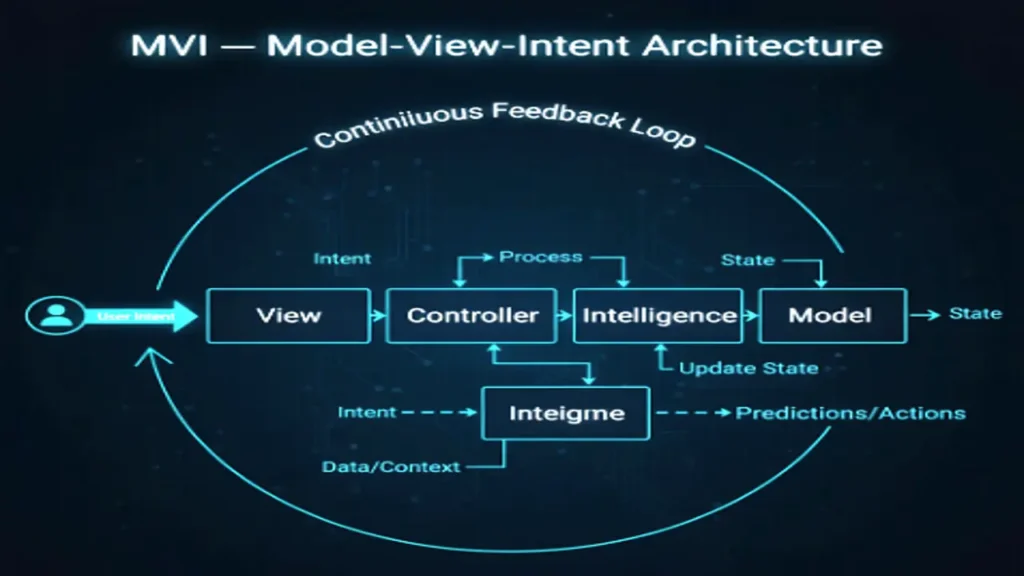
Traditional design patterns like MVC, Singleton, and Observer remain foundational, but AI-driven systems require new patterns that accommodate learning, adaptability, and uncertainty.
Key AI-Focused Patterns
| Pattern | Description | Example |
|---|---|---|
| Model-View-Intelligence (MVI) | Extends MVC by introducing an intelligence layer that learns from data. | A chatbot where the ML model adapts responses based on user behavior. |
| Feedback Loop Pattern | Uses continuous monitoring and data feedback to improve performance. | Recommendation systems refining predictions using user clicks. |
| Adaptive Pipeline Pattern | Dynamically changes data-processing steps based on real-time model output. | Fraud detection system adjusting thresholds based on detected anomalies. |
Insight: Intelligent patterns treat design as an evolving organism rather than a fixed structure.
Intelligent Requirements Engineering
Architectural Styles for Intelligent Systems
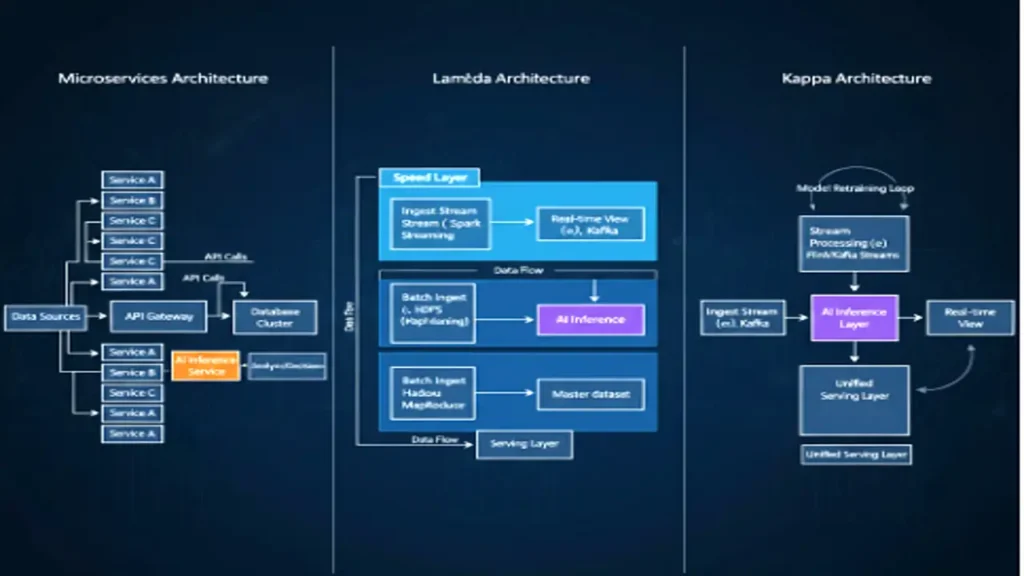
AI-powered applications demand flexible, scalable, and fault-tolerant architectures. The following styles dominate intelligent software engineering today:
Microservices with Embedded ML Components
- Each service manages a specific ML model or AI feature (e.g., recommendation, sentiment analysis).
- Models are containerized for independent updates and scaling.
- Communication occurs via REST or gRPC APIs.
Example: Netflix uses microservices for personalized recommendations each service handles a different prediction task.
Lambda Architecture
- Designed for real-time + batch data processing.
- Batch layer: Stores massive historical data for long-term insights.
- Speed layer: Processes streaming data for instant feedback.
- Serving layer: Combines both for unified output.
Example: Predictive analytics platforms use Lambda to combine past and live sensor data.
Kappa Architecture
- Simplifies Lambda by using a single streaming pipeline.
- Ideal for systems with continuous event streams (IoT, monitoring, finance).
Example: A stock-market AI model trained and retrained in real time as new transactions arrive.
Core AI/ML Concepts for Software Engineers
Model Deployment and Serving
Even the smartest ML model is useless if not efficiently deployed.
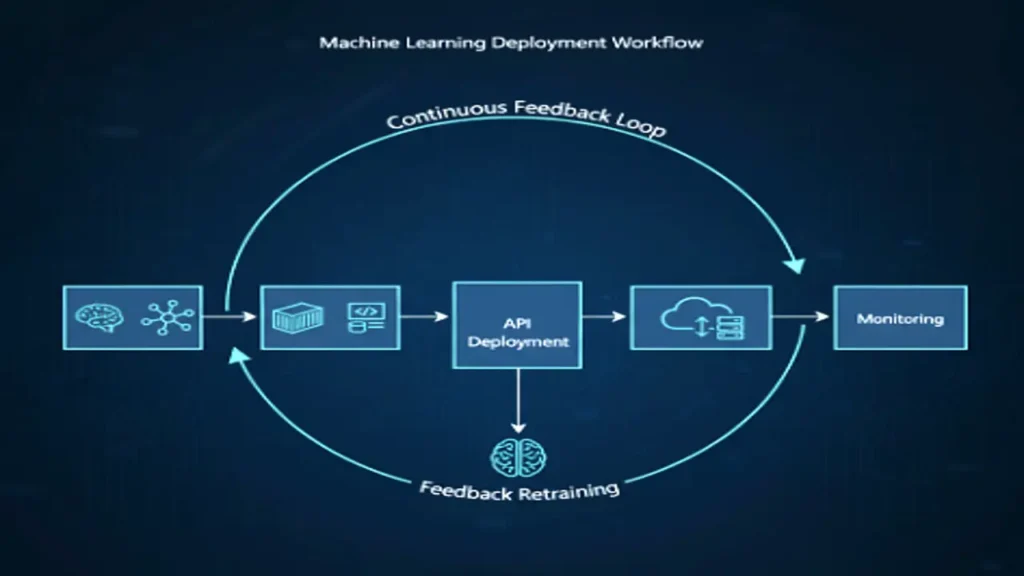
Model serving is the process of integrating trained models into production systems, enabling real-time predictions.
Core Deployment Concepts
| Stage | Description | Example Tools |
|---|---|---|
| Model Packaging | Convert the trained model into portable formats. | ONNX, TensorFlow SavedModel |
| Model Serving | Expose the model as an API for predictions. | FastAPI, Flask, TensorFlow Serving |
| Scaling & Monitoring | Handle concurrent requests and monitor drift. | Kubernetes, Prometheus, MLflow |
Best Practices
- Use containerization (Docker) for consistent deployment.
- Employ CI/CD pipelines for version control and retraining automation.
- Apply shadow testing to validate new models without production risk.
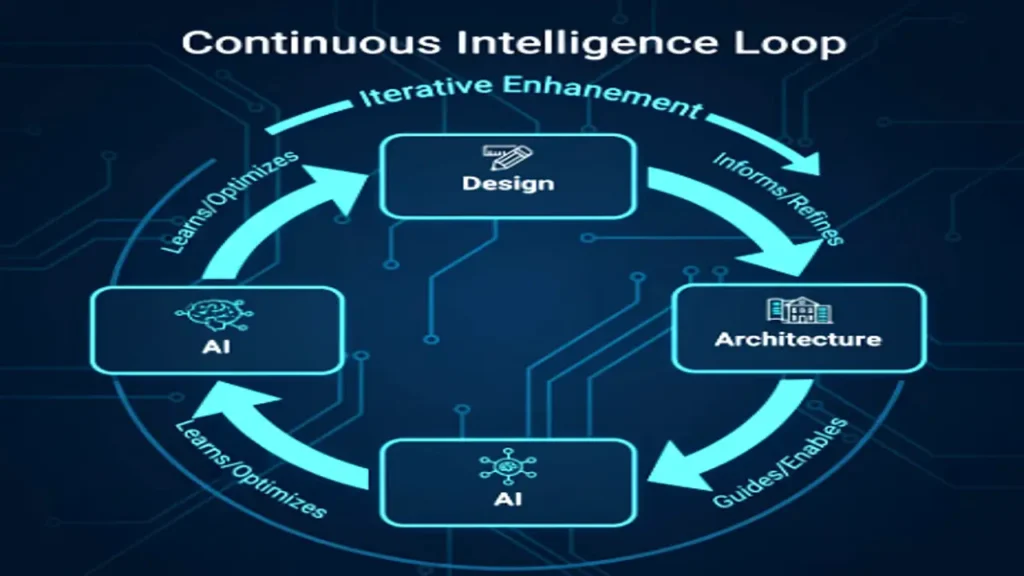
The Convergence of Design, Architecture, and Intelligence
Intelligent systems merge AI logic with software design principles.
A successful design allows:
- Autonomy components can adapt without full redeployment.
- Scalability architecture expands as new models are added.
- Observability data flow and decision transparency through monitoring.
In short: “Software learns, architects evolve.”
Lecture Summary
AI-assisted design tools suggest implementation snippets and architectural patterns.
Architectural styles like Microservices, Lambda, and Kappa enable scalable, adaptive intelligent systems.
Model deployment strategies (batch or real-time inference) ensure seamless AI integration.
The result: more efficient, adaptable, and intelligent software systems from design to deployment.
Core Insight: In Intelligent Software Engineering, architecture and design are enhanced by intelligence systems are built to learn, adapt, and optimize continuously.