What are the main impacts of climate change on the environment?
Climate Change Impacts: All You Need to Know
The Intergovernmental Panel on Climate Change (IPCC) identifies five major Reasons for Concern, each representing key thresholds of danger as the planet warms:
- Unique and Threatened Systems:
Coral reefs, glaciers, polar ecosystems, and cultural heritage sites are under serious threat from rising temperatures and sea levels. - Extreme Weather Events:
Heatwaves, floods, droughts, and cyclones are increasing in frequency and intensity. - Distribution of Impacts:
Poor and developing nations face disproportionate risks due to limited adaptive capacity. - Global Aggregate Impacts:
Widespread biodiversity loss, economic slowdown, and food insecurity impact global stability. - Large-Scale Singular Events:
Tipping points such as ice sheet collapse or Amazon rainforest dieback could cause irreversible change.

Impacts on Natural Systems
Natural systems form the backbone of Earth’s stability. Climate change disrupts these systems through feedback loops that intensify global warming.
- Oceans:
Rising CO₂ levels cause acidification, reducing marine biodiversity and damaging coral reefs. - Cryosphere:
Glacial melting and permafrost thaw release methane a potent greenhouse gas. - Forests:
Forest fires and changing rainfall patterns alter ecosystems and reduce carbon storage. - Biodiversity:
Many species migrate to cooler regions, while others face extinction due to rapid climate shifts. - Hydrosphere:
Altered rainfall cycles cause floods in some areas and droughts in others.
We know climate change has some reactions that affects nature which beautifully described as:
Reactions and Attitude Towards Climate Change.
Impacts on Societal Systems
Human societies depend on stable climates for food, water, health, and infrastructure. As global temperatures rise, these systems face immense stress.
- Agriculture:
Unpredictable rainfall and extreme heat threaten crop yields and livestock. - Water Resources:
Melting glaciers disrupt river flows, creating shortages in dry seasons. - Health:
Increased heat waves and pollution worsen respiratory and cardiovascular diseases. - Infrastructure:
Floods and storms damage transport networks, homes, and cities. - Economy and Migration:
Rising sea levels and resource scarcity drive millions to migrate, fueling social and economic inequality.
Interconnected Systems: Nature and Society
Climate change reveals how deeply natural and societal systems are linked.
When coral reefs die, fisheries collapse. When glaciers melt, communities lose freshwater. When forests burn, carbon levels spike worsening global warming.
This feedback cycle shows that protecting ecosystems is essential to protecting humanity itself.
Explore Technical development and changing climate, why it still matters and everything you need to know.
Building Resilience and Hope
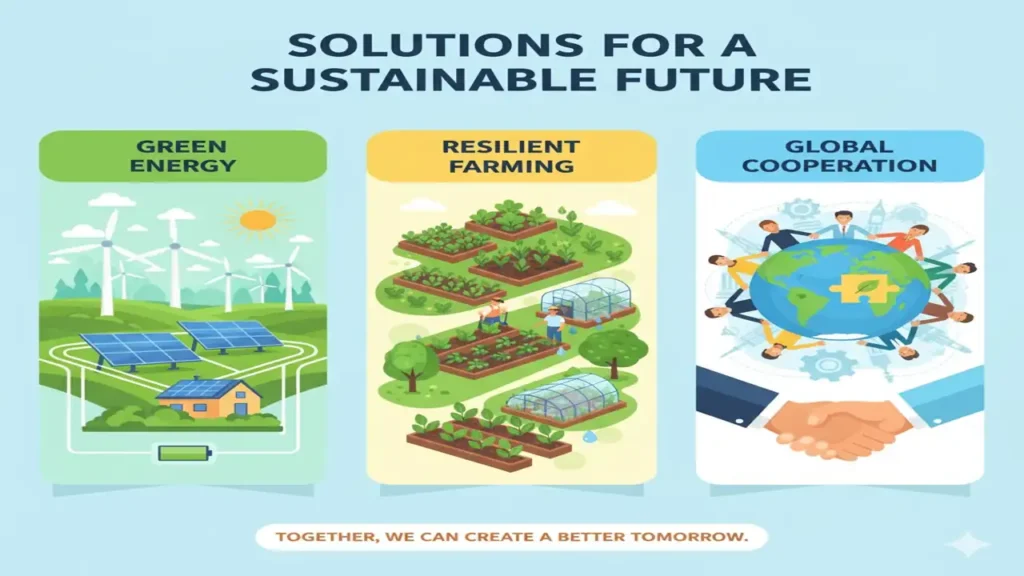
While the risks are enormous, the solutions are clear.
- Investing in renewable energy and reforestation
- Enhancing climate-resilient agriculture
- Supporting climate-aware education
- Promoting global cooperation
Human adaptation and innovation remain the key to reversing climate change impacts.

Conclusion
The impacts of climate change are both global and personal. From melting ice to rising inequality, every aspect of life is connected to the climate system. Understanding the reasons for concern helps policymakers and students identify where to act and how to adapt.
A sustainable future begins when knowledge turns into climate action.
People also ask:
It causes rising sea levels, stronger storms, melting ice caps, and loss of biodiversity worldwide.
It increases heat-related illnesses, spreads diseases, and worsens air quality, especially in vulnerable communities.
Unpredictable weather, droughts, and floods are reducing crop yields and threatening food security in many regions.