What is the main cause of wildlife loss in Pakistan?
Week 12 – Wildlife Conservation in Pakistan: Endangered Species & Protection Efforts
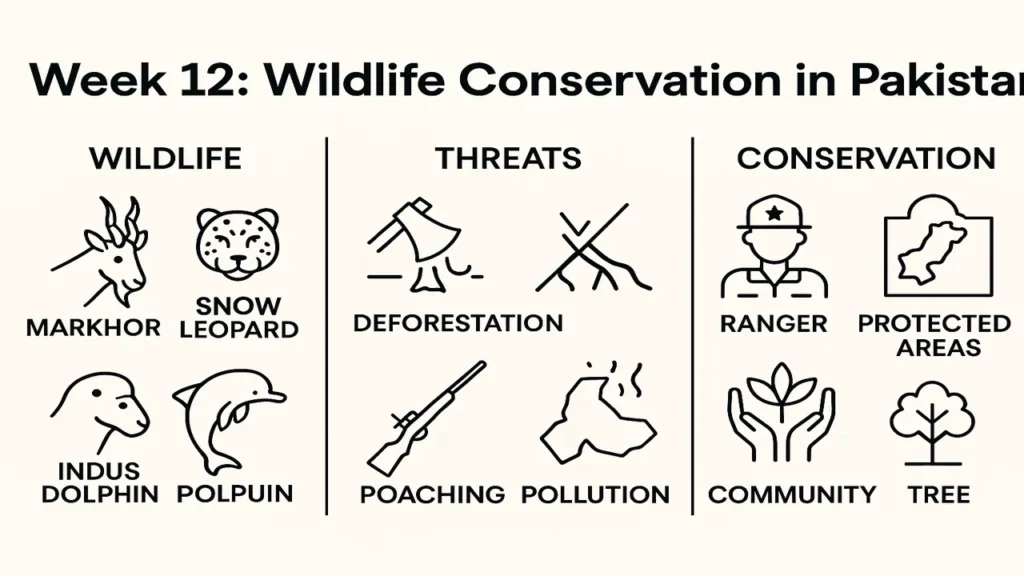
Wildlife conservation in Pakistan key species, threats, and national protection programs ensuring biodiversity and ecosystem balance.
Wildlife in Pakistan
Pakistan hosts diverse wildlife due to its variety of climates and habitats from mountains to deserts, wetlands, and coastal zones.
| Habitat | Key Species |
|---|---|
| Northern Mountains (KPK, GB) | Markhor, Snow Leopard, Himalayan Brown Bear, Musk Deer |
| Deserts (Thar, Cholistan) | Chinkara Gazelle, Desert Cat, Indian Fox |
| Wetlands (Sindh, Punjab) | Indus Dolphin, Marsh Crocodile, Waterfowl |
| Forests (Himalayan & Riverine) | Leopard, Barking Deer, Monal Pheasant |
| Coastal Areas | Green Turtles, Dolphins, Migratory Birds |
Threats to Wildlife
- Habitat Loss: Deforestation, urbanization, dam construction, and agriculture.
- Illegal Hunting & Poaching: Markhor horns, Houbara bustard hunting, trophy trade.
- Pollution: Industrial discharge, pesticide bioaccumulation.
- Climate Change: Altered migration and breeding cycles.
- Human–Wildlife Conflict: Crop raiding, livestock predation, retaliatory killings.
Case Example:
The Indus River Dolphin, once widespread, is now restricted to a 1,200 km stretch due to barrages and water diversion.
Wildlife Conservation Laws and Institutions
| Law/Program | Description |
|---|---|
| Pakistan Wildlife Ordinance (1972) | Defines protection levels and penalties for hunting. |
| National Conservation Strategy (1992) | Integrates biodiversity into development. |
| CITES (Convention on International Trade in Endangered Species) | Pakistan is a signatory controlling wildlife trade. |
| Protected Areas System | National Parks, Wildlife Sanctuaries, Game Reserves. |
| Zoo & Captive Breeding Programs | For endangered species reintroduction. |
Protected Areas and National Parks
| Province | Major National Parks | Species Highlights |
|---|---|---|
| KPK | Khunjerab, Ayubia | Snow leopard, ibex |
| Punjab | Lal Suhanra, Changa Manga | Chinkara, wild boar |
| Sindh | Kirthar, Haleji Lake | Crocodiles, wild sheep |
| Balochistan | Hingol, Hazarganji-Chiltan | Markhor, urial, reptiles |
| Gilgit-Baltistan | Central Karakoram, Khunjerab | Himalayan brown bear |
Pakistan’s Protected Areas cover ~13% of land area.
Week 11 – Forests in Pakistan: Importance, Deforestation Causes & Conservation
Endangered & Flagship Species
| Species | Status | Conservation Effort |
|---|---|---|
| Markhor (National Animal) | Endangered → Improved | Trophy hunting funds local communities |
| Snow Leopard | Endangered | Global Snow Leopard Ecosystem Program (GSLEP) |
| Indus River Dolphin | Endangered | WWF Dolphin Conservation Program |
| Houbara Bustard | Vulnerable | Controlled hunting programs |
| Green Turtle | Threatened | Karachi turtle hatcheries |
| Himalayan Brown Bear | Endangered | Khunjerab & Deosai National Parks |
| Marsh Crocodile | Vulnerable | Sindh wildlife protection efforts |
Community & NGO Roles
- WWF-Pakistan – Indus Dolphin, Turtle, and Mangrove projects.
- IUCN Pakistan – Red List assessments, policy support.
- Snow Leopard Foundation (SLF) – Livestock insurance, anti-poaching.
- Local Communities – Co-management of forests and grazing zones.
Summary
Pakistan’s wildlife is a priceless natural heritage. Despite pressures from human activities, effective laws, community-led conservation, and protected areas can ensure survival of unique species like the Snow Leopard and Indus Dolphin.
The approach followed at E Lectures reflects both academic depth and easy-to-understand explanations.
People also ask:
Habitat destruction and illegal hunting are major causes.
It channels revenue to local communities, promoting protection.
Species that represent broader conservation goals (e.g., Snow Leopard).
Over 30 declared, covering various ecosystems.
Join WWF or local awareness clubs, plant native trees, report wildlife crimes.