
![Top 10 Ways AI Automation for Business Is Transforming the Future [2025 Edition]](https://electuresai.com/wp-content/uploads/2025/12/A_digital_illustration_serves_as_the_header_image__featured_converted.webp)
How AI automation for business is revolutionizing industries through smart workflows, cost savings, and real-time decision-making. Learn practical examples, benefits, and future trends.
Transforming the Modern World: The Power of AI Automation for Business
Artificial intelligence (AI) has rapidly moved from the realm of futuristic fantasy to an essential part of modern business operations. AI automation for business is no longer a buzzword it’s the foundation for smarter, faster, and more efficient organizations. Whether it’s improving customer service, optimizing logistics, or driving data-backed marketing decisions, AI automation is reshaping how businesses operate in the digital era.
What Is AI Automation in Business?
AI automation combines the power of artificial intelligence and traditional automation to streamline repetitive tasks, enhance decision-making, and improve overall efficiency. Unlike simple rule-based automation, AI-driven systems learn from data, recognize patterns, and adapt to changing business environments.
In other words, AI automation allows businesses to go beyond routine task execution—it helps them predict outcomes, optimize resources, and innovate continuously. From chatbots that understand customer emotions to algorithms that forecast sales trends, AI automation is driving measurable results across every industry.
The Intersection of AI, Machine Learning, and Business Efficiency
AI automation relies on machine learning (ML), deep learning, and natural language processing (NLP) to understand and respond to data. When these technologies work together, they enable businesses to build intelligent systems that can perform complex analyses and make autonomous decisions.
For example:
- Machine learning algorithms detect anomalies in supply chains before disruptions occur.
- NLP models automate customer communications in multiple languages.
- Predictive analytics systems forecast inventory needs and marketing performance.
How AI Automation Works in Modern Enterprises
The process typically begins with data collection and integration across various departments marketing, HR, finance, and operations. The AI model is then trained to identify relationships between inputs (like customer behaviors) and outputs (like conversions or churn).
Once trained, these models can perform actions automatically such as sending personalized emails, routing service requests, or generating business insights in real time.
Workflow Automation and Smart Decision-Making
One of the most significant advantages of AI automation is its ability to connect multiple systems. Tools like Zapier, UiPath, and Microsoft Power Automate integrate AI-driven logic into routine workflows, allowing seamless decision-making without human intervention.
Imagine this: A lead visits your website, interacts with your chatbot, and receives a custom product recommendation all powered by AI. Meanwhile, your CRM automatically updates, your sales team is notified, and marketing campaigns adjust in real time. That’s AI automation in action.
Key Benefits of AI Automation for Businesses
1. Increased Productivity and Efficiency
AI systems work 24/7, enabling faster task execution with fewer errors. Employees are freed from monotonous tasks, allowing them to focus on innovation, strategy, and creative problem-solving.
2. Cost Reduction and Resource Optimization
Automating manual processes significantly reduces labor costs. Predictive AI also helps allocate resources efficiently whether it’s staff scheduling, energy management, or supply chain planning.
3. Enhanced Accuracy and Data-Driven Insights
With AI, businesses can process vast datasets that humans simply can’t manage manually. From trend analysis to performance forecasting, AI ensures accuracy and actionable insights.
Real-World Applications of AI Automation
AI in Customer Support and Chatbots
AI-powered chatbots handle thousands of customer queries simultaneously answering FAQs, processing orders, and even providing emotional support. Tools like ChatGPT, Drift, and Zendesk AI have made customer service more scalable and responsive.
Sales, Marketing, and Lead Generation Automation
AI helps identify high-value leads, optimize ad campaigns, and personalize customer journeys. Marketing platforms like HubSpot, Marketo, and Salesforce Einstein use AI to analyze user behavior and predict purchase intent.
AI-Powered HR and Employee Management
Recruitment processes are now faster and more objective with AI tools that screen resumes, predict candidate success, and automate onboarding workflows. Systems like HireVue and Eightfold AI are revolutionizing HR management.
AI in Supply Chain and Manufacturing
AI forecasts demand, detects maintenance issues, and optimizes inventory. In manufacturing, predictive maintenance reduces downtime, while robotic automation enhances precision and productivity.
Learn more about AI automation technologies on IBM’s official AI page.
How Small and Medium-Sized Businesses Can Adopt AI Automation
While large corporations have long embraced automation, small and medium-sized enterprises (SMEs) are now discovering that AI automation for business is not just attainable but essential. With the rise of affordable AI-powered tools and cloud-based platforms, businesses of all sizes can automate their workflows without major upfront investments.
Affordable AI Tools and SaaS Platforms
Platforms such as Zapier, HubSpot, and ChatGPT for Business provide SMEs with plug-and-play AI automation solutions. These tools handle repetitive tasks like lead scoring, customer follow-ups, email campaigns, and even inventory alerts. Cloud-based AI platforms allow small businesses to scale as they grow, paying only for what they use.
Integration with Existing Systems
Modern AI tools can integrate with common business systems such as Salesforce, Slack, and QuickBooks. APIs and automation platforms make it easy to link multiple systems together eliminating data silos and ensuring that insights flow seamlessly between departments.
Overcoming Technical and Cultural Barriers
Many SMEs hesitate to adopt AI because they fear complexity or lack of expertise. The key lies in education and incremental adoption. Start with small projects like automating invoicing or customer support and gradually expand. Training staff to work alongside AI fosters trust and acceptance.
Challenges and Limitations of AI Automation
As powerful as AI automation is, it’s not without challenges. Understanding these limitations helps businesses adopt the technology responsibly.
Ethical Concerns and Job Displacement
One major concern surrounding AI automation is job displacement. As repetitive tasks are automated, roles such as data entry, scheduling, and basic customer service may become redundant. However, new roles are also emerging such as AI supervisors, data analysts, and prompt engineers requiring human creativity and oversight.
Data Privacy and Cybersecurity Risks
AI systems rely heavily on data. This creates potential vulnerabilities if that data is not handled securely. Businesses must comply with regulations such as GDPR and CCPA, ensuring transparency and ethical handling of customer data. Implementing end-to-end encryption and robust access control can mitigate these risks.
Future Trends in AI Automation for Business
The next wave of AI automation for business will focus on personalization, predictive intelligence, and real-time analytics.
The Rise of Generative AI and Autonomous Systems
Generative AI (like ChatGPT, Gemini, and Claude) is moving beyond conversation it’s now generating reports, creating marketing materials, and even writing code. Businesses will increasingly rely on autonomous systems that can analyze trends, make predictions, and take independent action.
Predictive Analytics and Real-Time Decision Making
AI systems will soon provide instant recommendations to executives, offering scenario analysis and predictive outcomes. This shift from reactive to proactive decision-making will redefine strategic planning and operations.
AI as a Strategic Business Partner
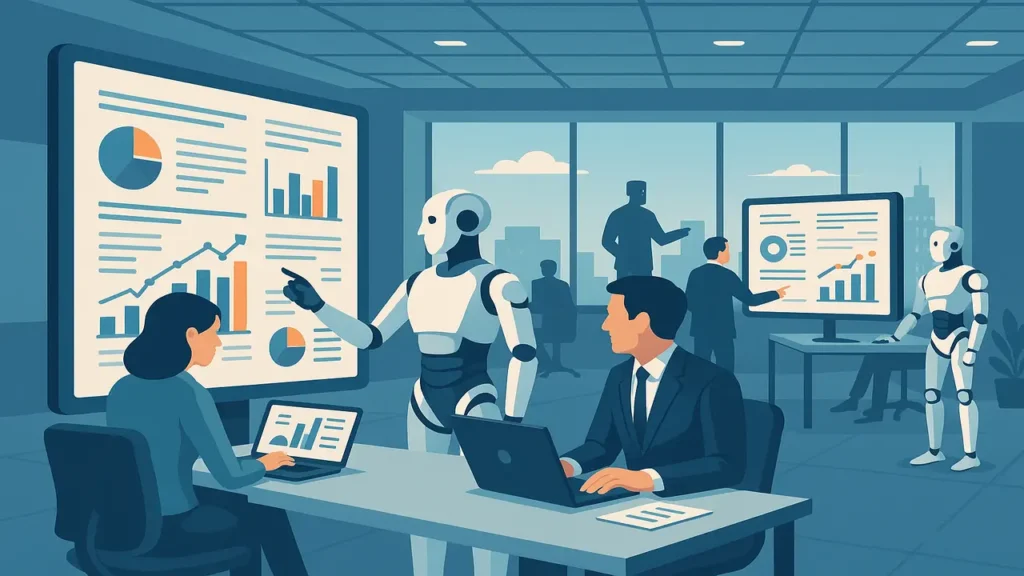
By 2030, AI won’t just assist it will collaborate. Advanced models will integrate into decision-making boards, offering insights, simulations, and ethical evaluations to guide company strategies.
FAQs About AI Automation for Business
AI automation uses artificial intelligence technologies like machine learning and natural language processing to automate business tasks, optimize operations, and enhance decision-making.
It eliminates manual, repetitive tasks reducing labor costs and errors while optimizing resource allocation and energy usage.
Yes! Many cloud-based AI platforms are scalable and cost-effective, allowing SMEs to automate tasks without needing in-house AI experts.
The primary challenges include data security, high implementation costs for advanced systems, potential job displacement, and the need for ethical governance.
AI chatbots and virtual assistants provide 24/7 support, respond instantly, and learn from interactions—enhancing customer satisfaction and retention.
The future lies in integrated, predictive, and personalized automation, where AI acts as a proactive collaborator rather than a passive tool.