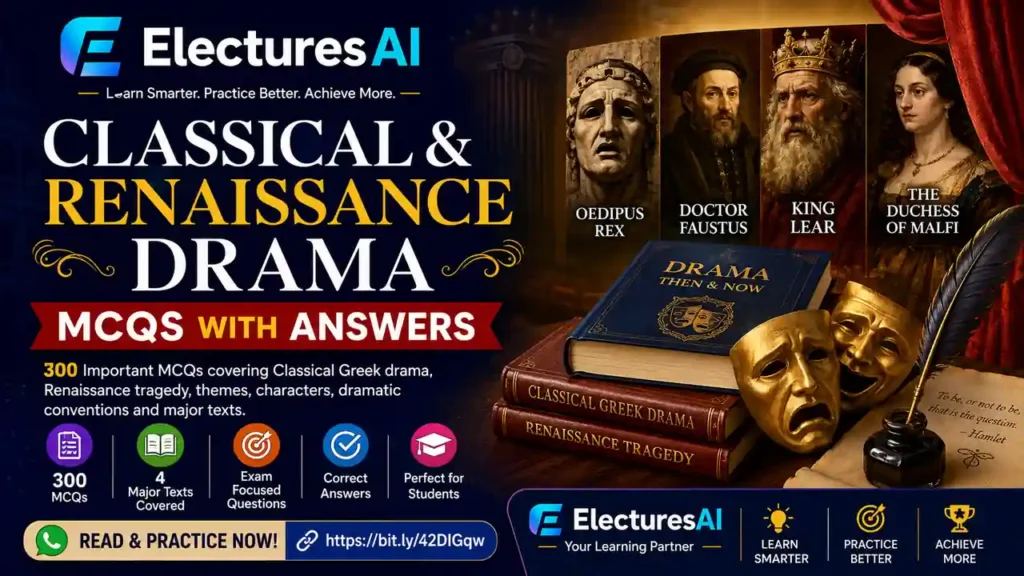
Classical & Renaissance Drama Basics
Q1. Classical drama is most closely associated with which ancient civilization? (1)
A. Greek and Roman civilization
B. Victorian England
C. Modern America
D. Postcolonial Africa
Answer: Greek and Roman civilization
Q2. The word tragedy originally comes from which dramatic tradition? (2)
A. Greek theatre
B. Elizabethan novel
C. Romantic poetry
D. Modern short story
Answer: Greek theatre
Q3. A major purpose of Renaissance drama was to explore human nature through what? (3)
A. Action, conflict, and character
B. Scientific formulas only
C. Travel writing
D. Legal documents
Answer: Action, conflict, and character
Q4. Which element is central to most tragic drama? (4)
A. A serious conflict leading to suffering
B. A recipe for food
C. A comic dance only
D. A travel guide
Answer: A serious conflict leading to suffering
Q5. The term 'mythology' in classical drama usually refers to what? (5)
A. Traditional stories of gods, heroes, and origins
B. Business advertisements
C. Newspaper reports
D. Computer manuals
Answer: Traditional stories of gods, heroes, and origins
Q6. Classical drama is most closely associated with which ancient civilization? (6)
A. Greek and Roman civilization
B. Victorian England
C. Modern America
D. Postcolonial Africa
Answer: Greek and Roman civilization
Q7. The word tragedy originally comes from which dramatic tradition? (7)
A. Greek theatre
B. Elizabethan novel
C. Romantic poetry
D. Modern short story
Answer: Greek theatre
Q8. A major purpose of Renaissance drama was to explore human nature through what? (8)
A. Action, conflict, and character
B. Scientific formulas only
C. Travel writing
D. Legal documents
Answer: Action, conflict, and character
Q9. Which element is central to most tragic drama? (9)
A. A serious conflict leading to suffering
B. A recipe for food
C. A comic dance only
D. A travel guide
Answer: A serious conflict leading to suffering
Q10. The term 'mythology' in classical drama usually refers to what? (10)
A. Traditional stories of gods, heroes, and origins
B. Business advertisements
C. Newspaper reports
D. Computer manuals
Answer: Traditional stories of gods, heroes, and origins
Q11. Classical drama is most closely associated with which ancient civilization? (11)
A. Greek and Roman civilization
B. Victorian England
C. Modern America
D. Postcolonial Africa
Answer: Greek and Roman civilization
Q12. The word tragedy originally comes from which dramatic tradition? (12)
A. Greek theatre
B. Elizabethan novel
C. Romantic poetry
D. Modern short story
Answer: Greek theatre
Q13. A major purpose of Renaissance drama was to explore human nature through what? (13)
A. Action, conflict, and character
B. Scientific formulas only
C. Travel writing
D. Legal documents
Answer: Action, conflict, and character
Q14. Which element is central to most tragic drama? (14)
A. A serious conflict leading to suffering
B. A recipe for food
C. A comic dance only
D. A travel guide
Answer: A serious conflict leading to suffering
Q15. The term 'mythology' in classical drama usually refers to what? (15)
A. Traditional stories of gods, heroes, and origins
B. Business advertisements
C. Newspaper reports
D. Computer manuals
Answer: Traditional stories of gods, heroes, and origins
Q16. Classical drama is most closely associated with which ancient civilization? (16)
A. Greek and Roman civilization
B. Victorian England
C. Modern America
D. Postcolonial Africa
Answer: Greek and Roman civilization
Q17. The word tragedy originally comes from which dramatic tradition? (17)
A. Greek theatre
B. Elizabethan novel
C. Romantic poetry
D. Modern short story
Answer: Greek theatre
Q18. A major purpose of Renaissance drama was to explore human nature through what? (18)
A. Action, conflict, and character
B. Scientific formulas only
C. Travel writing
D. Legal documents
Answer: Action, conflict, and character
Q19. Which element is central to most tragic drama? (19)
A. A serious conflict leading to suffering
B. A recipe for food
C. A comic dance only
D. A travel guide
Answer: A serious conflict leading to suffering
Q20. The term 'mythology' in classical drama usually refers to what? (20)
A. Traditional stories of gods, heroes, and origins
B. Business advertisements
C. Newspaper reports
D. Computer manuals
Answer: Traditional stories of gods, heroes, and origins
Q21. Classical drama is most closely associated with which ancient civilization? (21)
A. Greek and Roman civilization
B. Victorian England
C. Modern America
D. Postcolonial Africa
Answer: Greek and Roman civilization
Q22. The word tragedy originally comes from which dramatic tradition? (22)
A. Greek theatre
B. Elizabethan novel
C. Romantic poetry
D. Modern short story
Answer: Greek theatre
Q23. A major purpose of Renaissance drama was to explore human nature through what? (23)
A. Action, conflict, and character
B. Scientific formulas only
C. Travel writing
D. Legal documents
Answer: Action, conflict, and character
Q24. Which element is central to most tragic drama? (24)
A. A serious conflict leading to suffering
B. A recipe for food
C. A comic dance only
D. A travel guide
Answer: A serious conflict leading to suffering
Q25. The term 'mythology' in classical drama usually refers to what? (25)
A. Traditional stories of gods, heroes, and origins
B. Business advertisements
C. Newspaper reports
D. Computer manuals
Answer: Traditional stories of gods, heroes, and origins
Q26. Classical drama is most closely associated with which ancient civilization? (26)
A. Greek and Roman civilization
B. Victorian England
C. Modern America
D. Postcolonial Africa
Answer: Greek and Roman civilization
Q27. The word tragedy originally comes from which dramatic tradition? (27)
A. Greek theatre
B. Elizabethan novel
C. Romantic poetry
D. Modern short story
Answer: Greek theatre
Q28. A major purpose of Renaissance drama was to explore human nature through what? (28)
A. Action, conflict, and character
B. Scientific formulas only
C. Travel writing
D. Legal documents
Answer: Action, conflict, and character
Q29. Which element is central to most tragic drama? (29)
A. A serious conflict leading to suffering
B. A recipe for food
C. A comic dance only
D. A travel guide
Answer: A serious conflict leading to suffering
Q30. The term 'mythology' in classical drama usually refers to what? (30)
A. Traditional stories of gods, heroes, and origins
B. Business advertisements
C. Newspaper reports
D. Computer manuals
Answer: Traditional stories of gods, heroes, and origins
Q31. Classical drama is most closely associated with which ancient civilization? (31)
A. Greek and Roman civilization
B. Victorian England
C. Modern America
D. Postcolonial Africa
Answer: Greek and Roman civilization
Q32. The word tragedy originally comes from which dramatic tradition? (32)
A. Greek theatre
B. Elizabethan novel
C. Romantic poetry
D. Modern short story
Answer: Greek theatre
Q33. A major purpose of Renaissance drama was to explore human nature through what? (33)
A. Action, conflict, and character
B. Scientific formulas only
C. Travel writing
D. Legal documents
Answer: Action, conflict, and character
Q34. Which element is central to most tragic drama? (34)
A. A serious conflict leading to suffering
B. A recipe for food
C. A comic dance only
D. A travel guide
Answer: A serious conflict leading to suffering
Q35. The term 'mythology' in classical drama usually refers to what? (35)
A. Traditional stories of gods, heroes, and origins
B. Business advertisements
C. Newspaper reports
D. Computer manuals
Answer: Traditional stories of gods, heroes, and origins
Q36. Classical drama is most closely associated with which ancient civilization? (36)
A. Greek and Roman civilization
B. Victorian England
C. Modern America
D. Postcolonial Africa
Answer: Greek and Roman civilization
Q37. The word tragedy originally comes from which dramatic tradition? (37)
A. Greek theatre
B. Elizabethan novel
C. Romantic poetry
D. Modern short story
Answer: Greek theatre
Q38. A major purpose of Renaissance drama was to explore human nature through what? (38)
A. Action, conflict, and character
B. Scientific formulas only
C. Travel writing
D. Legal documents
Answer: Action, conflict, and character
Q39. Which element is central to most tragic drama? (39)
A. A serious conflict leading to suffering
B. A recipe for food
C. A comic dance only
D. A travel guide
Answer: A serious conflict leading to suffering
Q40. The term 'mythology' in classical drama usually refers to what? (40)
A. Traditional stories of gods, heroes, and origins
B. Business advertisements
C. Newspaper reports
D. Computer manuals
Answer: Traditional stories of gods, heroes, and origins
Q41. Classical drama is most closely associated with which ancient civilization? (41)
A. Greek and Roman civilization
B. Victorian England
C. Modern America
D. Postcolonial Africa
Answer: Greek and Roman civilization
Q42. The word tragedy originally comes from which dramatic tradition? (42)
A. Greek theatre
B. Elizabethan novel
C. Romantic poetry
D. Modern short story
Answer: Greek theatre
Q43. A major purpose of Renaissance drama was to explore human nature through what? (43)
A. Action, conflict, and character
B. Scientific formulas only
C. Travel writing
D. Legal documents
Answer: Action, conflict, and character
Q44. Which element is central to most tragic drama? (44)
A. A serious conflict leading to suffering
B. A recipe for food
C. A comic dance only
D. A travel guide
Answer: A serious conflict leading to suffering
Q45. The term 'mythology' in classical drama usually refers to what? (45)
A. Traditional stories of gods, heroes, and origins
B. Business advertisements
C. Newspaper reports
D. Computer manuals
Answer: Traditional stories of gods, heroes, and origins
Q46. Classical drama is most closely associated with which ancient civilization? (46)
A. Greek and Roman civilization
B. Victorian England
C. Modern America
D. Postcolonial Africa
Answer: Greek and Roman civilization
Q47. The word tragedy originally comes from which dramatic tradition? (47)
A. Greek theatre
B. Elizabethan novel
C. Romantic poetry
D. Modern short story
Answer: Greek theatre
Q48. A major purpose of Renaissance drama was to explore human nature through what? (48)
A. Action, conflict, and character
B. Scientific formulas only
C. Travel writing
D. Legal documents
Answer: Action, conflict, and character
Q49. Which element is central to most tragic drama? (49)
A. A serious conflict leading to suffering
B. A recipe for food
C. A comic dance only
D. A travel guide
Answer: A serious conflict leading to suffering
Q50. The term 'mythology' in classical drama usually refers to what? (50)
A. Traditional stories of gods, heroes, and origins
B. Business advertisements
C. Newspaper reports
D. Computer manuals
Answer: Traditional stories of gods, heroes, and origins
Oedipus Rex — Sophocles
Q51. Who wrote Oedipus Rex? (1)
A. Sophocles
B. William Wordsworth
C. Jane Austen
D. T. S. Eliot
Answer: Sophocles
Q52. Oedipus Rex mainly belongs to which genre? (2)
A. Drama/Tragedy
B. Epic comedy only
C. Pastoral lyric
D. Modern biography
Answer: Drama/Tragedy
Q53. The central figure in Oedipus Rex is generally considered to be who? (3)
A. Oedipus
B. Hamlet
C. Macbeth
D. Antonio
Answer: Oedipus
Q54. A key theme in Oedipus Rex is: (4)
A. fate and free will
B. industrial finance
C. space travel
D. sports training
Answer: fate and free will
Q55. The setting or cultural world of Oedipus Rex is linked with: (5)
A. Thebes
B. New York
C. Paris in the 20th century
D. Tokyo
Answer: Thebes
Q56. Why is Oedipus Rex studied in drama courses? (6)
A. For its themes, characters, structure, and historical importance
B. Only for grammar rules
C. Only for spelling practice
D. Only for mathematics
Answer: For its themes, characters, structure, and historical importance
Q57. In studying Oedipus Rex, students should focus on: (7)
A. Plot, character, context, language, and themes
B. Chemical reactions only
C. Banking laws only
D. Computer hardware only
Answer: Plot, character, context, language, and themes
Q58. Which reading skill is useful for analyzing Oedipus Rex? (8)
A. Close reading
B. Random guessing
C. Ignoring context
D. Skipping all dialogue
Answer: Close reading
Q59. The conflicts in Oedipus Rex help reveal: (9)
A. Moral, social, and psychological concerns
B. Weather reports only
C. Market prices
D. Cooking steps
Answer: Moral, social, and psychological concerns
Q60. A good exam answer on Oedipus Rex should include: (10)
A. Relevant textual reference and clear argument
B. Only one-word replies
C. No explanation
D. Unrelated jokes
Answer: Relevant textual reference and clear argument
Q61. Who wrote Oedipus Rex? (11)
A. Sophocles
B. William Wordsworth
C. Jane Austen
D. T. S. Eliot
Answer: Sophocles
Q62. Oedipus Rex mainly belongs to which genre? (12)
A. Drama/Tragedy
B. Epic comedy only
C. Pastoral lyric
D. Modern biography
Answer: Drama/Tragedy
Q63. The central figure in Oedipus Rex is generally considered to be who? (13)
A. Oedipus
B. Hamlet
C. Macbeth
D. Antonio
Answer: Oedipus
Q64. A key theme in Oedipus Rex is: (14)
A. fate and free will
B. industrial finance
C. space travel
D. sports training
Answer: fate and free will
Q65. The setting or cultural world of Oedipus Rex is linked with: (15)
A. Thebes
B. New York
C. Paris in the 20th century
D. Tokyo
Answer: Thebes
Q66. Why is Oedipus Rex studied in drama courses? (16)
A. For its themes, characters, structure, and historical importance
B. Only for grammar rules
C. Only for spelling practice
D. Only for mathematics
Answer: For its themes, characters, structure, and historical importance
Q67. In studying Oedipus Rex, students should focus on: (17)
A. Plot, character, context, language, and themes
B. Chemical reactions only
C. Banking laws only
D. Computer hardware only
Answer: Plot, character, context, language, and themes
Q68. Which reading skill is useful for analyzing Oedipus Rex? (18)
A. Close reading
B. Random guessing
C. Ignoring context
D. Skipping all dialogue
Answer: Close reading
Q69. The conflicts in Oedipus Rex help reveal: (19)
A. Moral, social, and psychological concerns
B. Weather reports only
C. Market prices
D. Cooking steps
Answer: Moral, social, and psychological concerns
Q70. A good exam answer on Oedipus Rex should include: (20)
A. Relevant textual reference and clear argument
B. Only one-word replies
C. No explanation
D. Unrelated jokes
Answer: Relevant textual reference and clear argument
Q71. Who wrote Oedipus Rex? (21)
A. Sophocles
B. William Wordsworth
C. Jane Austen
D. T. S. Eliot
Answer: Sophocles
Q72. Oedipus Rex mainly belongs to which genre? (22)
A. Drama/Tragedy
B. Epic comedy only
C. Pastoral lyric
D. Modern biography
Answer: Drama/Tragedy
Q73. The central figure in Oedipus Rex is generally considered to be who? (23)
A. Oedipus
B. Hamlet
C. Macbeth
D. Antonio
Answer: Oedipus
Q74. A key theme in Oedipus Rex is: (24)
A. fate and free will
B. industrial finance
C. space travel
D. sports training
Answer: fate and free will
Q75. The setting or cultural world of Oedipus Rex is linked with: (25)
A. Thebes
B. New York
C. Paris in the 20th century
D. Tokyo
Answer: Thebes
Q76. Why is Oedipus Rex studied in drama courses? (26)
A. For its themes, characters, structure, and historical importance
B. Only for grammar rules
C. Only for spelling practice
D. Only for mathematics
Answer: For its themes, characters, structure, and historical importance
Q77. In studying Oedipus Rex, students should focus on: (27)
A. Plot, character, context, language, and themes
B. Chemical reactions only
C. Banking laws only
D. Computer hardware only
Answer: Plot, character, context, language, and themes
Q78. Which reading skill is useful for analyzing Oedipus Rex? (28)
A. Close reading
B. Random guessing
C. Ignoring context
D. Skipping all dialogue
Answer: Close reading
Q79. The conflicts in Oedipus Rex help reveal: (29)
A. Moral, social, and psychological concerns
B. Weather reports only
C. Market prices
D. Cooking steps
Answer: Moral, social, and psychological concerns
Q80. A good exam answer on Oedipus Rex should include: (30)
A. Relevant textual reference and clear argument
B. Only one-word replies
C. No explanation
D. Unrelated jokes
Answer: Relevant textual reference and clear argument
Q81. Who wrote Oedipus Rex? (31)
A. Sophocles
B. William Wordsworth
C. Jane Austen
D. T. S. Eliot
Answer: Sophocles
Q82. Oedipus Rex mainly belongs to which genre? (32)
A. Drama/Tragedy
B. Epic comedy only
C. Pastoral lyric
D. Modern biography
Answer: Drama/Tragedy
Q83. The central figure in Oedipus Rex is generally considered to be who? (33)
A. Oedipus
B. Hamlet
C. Macbeth
D. Antonio
Answer: Oedipus
Q84. A key theme in Oedipus Rex is: (34)
A. fate and free will
B. industrial finance
C. space travel
D. sports training
Answer: fate and free will
Q85. The setting or cultural world of Oedipus Rex is linked with: (35)
A. Thebes
B. New York
C. Paris in the 20th century
D. Tokyo
Answer: Thebes
Q86. Why is Oedipus Rex studied in drama courses? (36)
A. For its themes, characters, structure, and historical importance
B. Only for grammar rules
C. Only for spelling practice
D. Only for mathematics
Answer: For its themes, characters, structure, and historical importance
Q87. In studying Oedipus Rex, students should focus on: (37)
A. Plot, character, context, language, and themes
B. Chemical reactions only
C. Banking laws only
D. Computer hardware only
Answer: Plot, character, context, language, and themes
Q88. Which reading skill is useful for analyzing Oedipus Rex? (38)
A. Close reading
B. Random guessing
C. Ignoring context
D. Skipping all dialogue
Answer: Close reading
Q89. The conflicts in Oedipus Rex help reveal: (39)
A. Moral, social, and psychological concerns
B. Weather reports only
C. Market prices
D. Cooking steps
Answer: Moral, social, and psychological concerns
Q90. A good exam answer on Oedipus Rex should include: (40)
A. Relevant textual reference and clear argument
B. Only one-word replies
C. No explanation
D. Unrelated jokes
Answer: Relevant textual reference and clear argument
Q91. Who wrote Oedipus Rex? (41)
A. Sophocles
B. William Wordsworth
C. Jane Austen
D. T. S. Eliot
Answer: Sophocles
Q92. Oedipus Rex mainly belongs to which genre? (42)
A. Drama/Tragedy
B. Epic comedy only
C. Pastoral lyric
D. Modern biography
Answer: Drama/Tragedy
Q93. The central figure in Oedipus Rex is generally considered to be who? (43)
A. Oedipus
B. Hamlet
C. Macbeth
D. Antonio
Answer: Oedipus
Q94. A key theme in Oedipus Rex is: (44)
A. fate and free will
B. industrial finance
C. space travel
D. sports training
Answer: fate and free will
Q95. The setting or cultural world of Oedipus Rex is linked with: (45)
A. Thebes
B. New York
C. Paris in the 20th century
D. Tokyo
Answer: Thebes
Q96. Why is Oedipus Rex studied in drama courses? (46)
A. For its themes, characters, structure, and historical importance
B. Only for grammar rules
C. Only for spelling practice
D. Only for mathematics
Answer: For its themes, characters, structure, and historical importance
Q97. In studying Oedipus Rex, students should focus on: (47)
A. Plot, character, context, language, and themes
B. Chemical reactions only
C. Banking laws only
D. Computer hardware only
Answer: Plot, character, context, language, and themes
Q98. Which reading skill is useful for analyzing Oedipus Rex? (48)
A. Close reading
B. Random guessing
C. Ignoring context
D. Skipping all dialogue
Answer: Close reading
Q99. The conflicts in Oedipus Rex help reveal: (49)
A. Moral, social, and psychological concerns
B. Weather reports only
C. Market prices
D. Cooking steps
Answer: Moral, social, and psychological concerns
Q100. A good exam answer on Oedipus Rex should include: (50)
A. Relevant textual reference and clear argument
B. Only one-word replies
C. No explanation
D. Unrelated jokes
Answer: Relevant textual reference and clear argument
Doctor Faustus — Christopher Marlowe
Q101. Who wrote Doctor Faustus? (1)
A. Christopher Marlowe
B. William Wordsworth
C. Jane Austen
D. T. S. Eliot
Answer: Christopher Marlowe
Q102. Doctor Faustus mainly belongs to which genre? (2)
A. Drama/Tragedy
B. Epic comedy only
C. Pastoral lyric
D. Modern biography
Answer: Drama/Tragedy
Q103. The central figure in Doctor Faustus is generally considered to be who? (3)
A. Faustus
B. Hamlet
C. Macbeth
D. Antonio
Answer: Faustus
Q104. A key theme in Doctor Faustus is: (4)
A. ambition and damnation
B. industrial finance
C. space travel
D. sports training
Answer: ambition and damnation
Q105. The setting or cultural world of Doctor Faustus is linked with: (5)
A. Germany
B. New York
C. Paris in the 20th century
D. Tokyo
Answer: Germany
Q106. Why is Doctor Faustus studied in drama courses? (6)
A. For its themes, characters, structure, and historical importance
B. Only for grammar rules
C. Only for spelling practice
D. Only for mathematics
Answer: For its themes, characters, structure, and historical importance
Q107. In studying Doctor Faustus, students should focus on: (7)
A. Plot, character, context, language, and themes
B. Chemical reactions only
C. Banking laws only
D. Computer hardware only
Answer: Plot, character, context, language, and themes
Q108. Which reading skill is useful for analyzing Doctor Faustus? (8)
A. Close reading
B. Random guessing
C. Ignoring context
D. Skipping all dialogue
Answer: Close reading
Q109. The conflicts in Doctor Faustus help reveal: (9)
A. Moral, social, and psychological concerns
B. Weather reports only
C. Market prices
D. Cooking steps
Answer: Moral, social, and psychological concerns
Q110. A good exam answer on Doctor Faustus should include: (10)
A. Relevant textual reference and clear argument
B. Only one-word replies
C. No explanation
D. Unrelated jokes
Answer: Relevant textual reference and clear argument
Q111. Who wrote Doctor Faustus? (11)
A. Christopher Marlowe
B. William Wordsworth
C. Jane Austen
D. T. S. Eliot
Answer: Christopher Marlowe
Q112. Doctor Faustus mainly belongs to which genre? (12)
A. Drama/Tragedy
B. Epic comedy only
C. Pastoral lyric
D. Modern biography
Answer: Drama/Tragedy
Q113. The central figure in Doctor Faustus is generally considered to be who? (13)
A. Faustus
B. Hamlet
C. Macbeth
D. Antonio
Answer: Faustus
Q114. A key theme in Doctor Faustus is: (14)
A. ambition and damnation
B. industrial finance
C. space travel
D. sports training
Answer: ambition and damnation
Q115. The setting or cultural world of Doctor Faustus is linked with: (15)
A. Germany
B. New York
C. Paris in the 20th century
D. Tokyo
Answer: Germany
Q116. Why is Doctor Faustus studied in drama courses? (16)
A. For its themes, characters, structure, and historical importance
B. Only for grammar rules
C. Only for spelling practice
D. Only for mathematics
Answer: For its themes, characters, structure, and historical importance
Q117. In studying Doctor Faustus, students should focus on: (17)
A. Plot, character, context, language, and themes
B. Chemical reactions only
C. Banking laws only
D. Computer hardware only
Answer: Plot, character, context, language, and themes
Q118. Which reading skill is useful for analyzing Doctor Faustus? (18)
A. Close reading
B. Random guessing
C. Ignoring context
D. Skipping all dialogue
Answer: Close reading
Q119. The conflicts in Doctor Faustus help reveal: (19)
A. Moral, social, and psychological concerns
B. Weather reports only
C. Market prices
D. Cooking steps
Answer: Moral, social, and psychological concerns
Q120. A good exam answer on Doctor Faustus should include: (20)
A. Relevant textual reference and clear argument
B. Only one-word replies
C. No explanation
D. Unrelated jokes
Answer: Relevant textual reference and clear argument
Q121. Who wrote Doctor Faustus? (21)
A. Christopher Marlowe
B. William Wordsworth
C. Jane Austen
D. T. S. Eliot
Answer: Christopher Marlowe
Q122. Doctor Faustus mainly belongs to which genre? (22)
A. Drama/Tragedy
B. Epic comedy only
C. Pastoral lyric
D. Modern biography
Answer: Drama/Tragedy
Q123. The central figure in Doctor Faustus is generally considered to be who? (23)
A. Faustus
B. Hamlet
C. Macbeth
D. Antonio
Answer: Faustus
Q124. A key theme in Doctor Faustus is: (24)
A. ambition and damnation
B. industrial finance
C. space travel
D. sports training
Answer: ambition and damnation
Q125. The setting or cultural world of Doctor Faustus is linked with: (25)
A. Germany
B. New York
C. Paris in the 20th century
D. Tokyo
Answer: Germany
Q126. Why is Doctor Faustus studied in drama courses? (26)
A. For its themes, characters, structure, and historical importance
B. Only for grammar rules
C. Only for spelling practice
D. Only for mathematics
Answer: For its themes, characters, structure, and historical importance
Q127. In studying Doctor Faustus, students should focus on: (27)
A. Plot, character, context, language, and themes
B. Chemical reactions only
C. Banking laws only
D. Computer hardware only
Answer: Plot, character, context, language, and themes
Q128. Which reading skill is useful for analyzing Doctor Faustus? (28)
A. Close reading
B. Random guessing
C. Ignoring context
D. Skipping all dialogue
Answer: Close reading
Q129. The conflicts in Doctor Faustus help reveal: (29)
A. Moral, social, and psychological concerns
B. Weather reports only
C. Market prices
D. Cooking steps
Answer: Moral, social, and psychological concerns
Q130. A good exam answer on Doctor Faustus should include: (30)
A. Relevant textual reference and clear argument
B. Only one-word replies
C. No explanation
D. Unrelated jokes
Answer: Relevant textual reference and clear argument
Q131. Who wrote Doctor Faustus? (31)
A. Christopher Marlowe
B. William Wordsworth
C. Jane Austen
D. T. S. Eliot
Answer: Christopher Marlowe
Q132. Doctor Faustus mainly belongs to which genre? (32)
A. Drama/Tragedy
B. Epic comedy only
C. Pastoral lyric
D. Modern biography
Answer: Drama/Tragedy
Q133. The central figure in Doctor Faustus is generally considered to be who? (33)
A. Faustus
B. Hamlet
C. Macbeth
D. Antonio
Answer: Faustus
Q134. A key theme in Doctor Faustus is: (34)
A. ambition and damnation
B. industrial finance
C. space travel
D. sports training
Answer: ambition and damnation
Q135. The setting or cultural world of Doctor Faustus is linked with: (35)
A. Germany
B. New York
C. Paris in the 20th century
D. Tokyo
Answer: Germany
Q136. Why is Doctor Faustus studied in drama courses? (36)
A. For its themes, characters, structure, and historical importance
B. Only for grammar rules
C. Only for spelling practice
D. Only for mathematics
Answer: For its themes, characters, structure, and historical importance
Q137. In studying Doctor Faustus, students should focus on: (37)
A. Plot, character, context, language, and themes
B. Chemical reactions only
C. Banking laws only
D. Computer hardware only
Answer: Plot, character, context, language, and themes
Q138. Which reading skill is useful for analyzing Doctor Faustus? (38)
A. Close reading
B. Random guessing
C. Ignoring context
D. Skipping all dialogue
Answer: Close reading
Q139. The conflicts in Doctor Faustus help reveal: (39)
A. Moral, social, and psychological concerns
B. Weather reports only
C. Market prices
D. Cooking steps
Answer: Moral, social, and psychological concerns
Q140. A good exam answer on Doctor Faustus should include: (40)
A. Relevant textual reference and clear argument
B. Only one-word replies
C. No explanation
D. Unrelated jokes
Answer: Relevant textual reference and clear argument
Q141. Who wrote Doctor Faustus? (41)
A. Christopher Marlowe
B. William Wordsworth
C. Jane Austen
D. T. S. Eliot
Answer: Christopher Marlowe
Q142. Doctor Faustus mainly belongs to which genre? (42)
A. Drama/Tragedy
B. Epic comedy only
C. Pastoral lyric
D. Modern biography
Answer: Drama/Tragedy
Q143. The central figure in Doctor Faustus is generally considered to be who? (43)
A. Faustus
B. Hamlet
C. Macbeth
D. Antonio
Answer: Faustus
Q144. A key theme in Doctor Faustus is: (44)
A. ambition and damnation
B. industrial finance
C. space travel
D. sports training
Answer: ambition and damnation
Q145. The setting or cultural world of Doctor Faustus is linked with: (45)
A. Germany
B. New York
C. Paris in the 20th century
D. Tokyo
Answer: Germany
Q146. Why is Doctor Faustus studied in drama courses? (46)
A. For its themes, characters, structure, and historical importance
B. Only for grammar rules
C. Only for spelling practice
D. Only for mathematics
Answer: For its themes, characters, structure, and historical importance
Q147. In studying Doctor Faustus, students should focus on: (47)
A. Plot, character, context, language, and themes
B. Chemical reactions only
C. Banking laws only
D. Computer hardware only
Answer: Plot, character, context, language, and themes
Q148. Which reading skill is useful for analyzing Doctor Faustus? (48)
A. Close reading
B. Random guessing
C. Ignoring context
D. Skipping all dialogue
Answer: Close reading
Q149. The conflicts in Doctor Faustus help reveal: (49)
A. Moral, social, and psychological concerns
B. Weather reports only
C. Market prices
D. Cooking steps
Answer: Moral, social, and psychological concerns
Q150. A good exam answer on Doctor Faustus should include: (50)
A. Relevant textual reference and clear argument
B. Only one-word replies
C. No explanation
D. Unrelated jokes
Answer: Relevant textual reference and clear argument
King Lear — William Shakespeare
Q151. Who wrote King Lear? (1)
A. William Shakespeare
B. William Wordsworth
C. Jane Austen
D. T. S. Eliot
Answer: William Shakespeare
Q152. King Lear mainly belongs to which genre? (2)
A. Drama/Tragedy
B. Epic comedy only
C. Pastoral lyric
D. Modern biography
Answer: Drama/Tragedy
Q153. The central figure in King Lear is generally considered to be who? (3)
A. King Lear
B. Hamlet
C. Macbeth
D. Antonio
Answer: King Lear
Q154. A key theme in King Lear is: (4)
A. power, madness, and family betrayal
B. industrial finance
C. space travel
D. sports training
Answer: power, madness, and family betrayal
Q155. The setting or cultural world of King Lear is linked with: (5)
A. Britain
B. New York
C. Paris in the 20th century
D. Tokyo
Answer: Britain
Q156. Why is King Lear studied in drama courses? (6)
A. For its themes, characters, structure, and historical importance
B. Only for grammar rules
C. Only for spelling practice
D. Only for mathematics
Answer: For its themes, characters, structure, and historical importance
Q157. In studying King Lear, students should focus on: (7)
A. Plot, character, context, language, and themes
B. Chemical reactions only
C. Banking laws only
D. Computer hardware only
Answer: Plot, character, context, language, and themes
Q158. Which reading skill is useful for analyzing King Lear? (8)
A. Close reading
B. Random guessing
C. Ignoring context
D. Skipping all dialogue
Answer: Close reading
Q159. The conflicts in King Lear help reveal: (9)
A. Moral, social, and psychological concerns
B. Weather reports only
C. Market prices
D. Cooking steps
Answer: Moral, social, and psychological concerns
Q160. A good exam answer on King Lear should include: (10)
A. Relevant textual reference and clear argument
B. Only one-word replies
C. No explanation
D. Unrelated jokes
Answer: Relevant textual reference and clear argument
Q161. Who wrote King Lear? (11)
A. William Shakespeare
B. William Wordsworth
C. Jane Austen
D. T. S. Eliot
Answer: William Shakespeare
Q162. King Lear mainly belongs to which genre? (12)
A. Drama/Tragedy
B. Epic comedy only
C. Pastoral lyric
D. Modern biography
Answer: Drama/Tragedy
Q163. The central figure in King Lear is generally considered to be who? (13)
A. King Lear
B. Hamlet
C. Macbeth
D. Antonio
Answer: King Lear
Q164. A key theme in King Lear is: (14)
A. power, madness, and family betrayal
B. industrial finance
C. space travel
D. sports training
Answer: power, madness, and family betrayal
Q165. The setting or cultural world of King Lear is linked with: (15)
A. Britain
B. New York
C. Paris in the 20th century
D. Tokyo
Answer: Britain
Q166. Why is King Lear studied in drama courses? (16)
A. For its themes, characters, structure, and historical importance
B. Only for grammar rules
C. Only for spelling practice
D. Only for mathematics
Answer: For its themes, characters, structure, and historical importance
Q167. In studying King Lear, students should focus on: (17)
A. Plot, character, context, language, and themes
B. Chemical reactions only
C. Banking laws only
D. Computer hardware only
Answer: Plot, character, context, language, and themes
Q168. Which reading skill is useful for analyzing King Lear? (18)
A. Close reading
B. Random guessing
C. Ignoring context
D. Skipping all dialogue
Answer: Close reading
Q169. The conflicts in King Lear help reveal: (19)
A. Moral, social, and psychological concerns
B. Weather reports only
C. Market prices
D. Cooking steps
Answer: Moral, social, and psychological concerns
Q170. A good exam answer on King Lear should include: (20)
A. Relevant textual reference and clear argument
B. Only one-word replies
C. No explanation
D. Unrelated jokes
Answer: Relevant textual reference and clear argument
Q171. Who wrote King Lear? (21)
A. William Shakespeare
B. William Wordsworth
C. Jane Austen
D. T. S. Eliot
Answer: William Shakespeare
Q172. King Lear mainly belongs to which genre? (22)
A. Drama/Tragedy
B. Epic comedy only
C. Pastoral lyric
D. Modern biography
Answer: Drama/Tragedy
Q173. The central figure in King Lear is generally considered to be who? (23)
A. King Lear
B. Hamlet
C. Macbeth
D. Antonio
Answer: King Lear
Q174. A key theme in King Lear is: (24)
A. power, madness, and family betrayal
B. industrial finance
C. space travel
D. sports training
Answer: power, madness, and family betrayal
Q175. The setting or cultural world of King Lear is linked with: (25)
A. Britain
B. New York
C. Paris in the 20th century
D. Tokyo
Answer: Britain
Q176. Why is King Lear studied in drama courses? (26)
A. For its themes, characters, structure, and historical importance
B. Only for grammar rules
C. Only for spelling practice
D. Only for mathematics
Answer: For its themes, characters, structure, and historical importance
Q177. In studying King Lear, students should focus on: (27)
A. Plot, character, context, language, and themes
B. Chemical reactions only
C. Banking laws only
D. Computer hardware only
Answer: Plot, character, context, language, and themes
Q178. Which reading skill is useful for analyzing King Lear? (28)
A. Close reading
B. Random guessing
C. Ignoring context
D. Skipping all dialogue
Answer: Close reading
Q179. The conflicts in King Lear help reveal: (29)
A. Moral, social, and psychological concerns
B. Weather reports only
C. Market prices
D. Cooking steps
Answer: Moral, social, and psychological concerns
Q180. A good exam answer on King Lear should include: (30)
A. Relevant textual reference and clear argument
B. Only one-word replies
C. No explanation
D. Unrelated jokes
Answer: Relevant textual reference and clear argument
Q181. Who wrote King Lear? (31)
A. William Shakespeare
B. William Wordsworth
C. Jane Austen
D. T. S. Eliot
Answer: William Shakespeare
Q182. King Lear mainly belongs to which genre? (32)
A. Drama/Tragedy
B. Epic comedy only
C. Pastoral lyric
D. Modern biography
Answer: Drama/Tragedy
Q183. The central figure in King Lear is generally considered to be who? (33)
A. King Lear
B. Hamlet
C. Macbeth
D. Antonio
Answer: King Lear
Q184. A key theme in King Lear is: (34)
A. power, madness, and family betrayal
B. industrial finance
C. space travel
D. sports training
Answer: power, madness, and family betrayal
Q185. The setting or cultural world of King Lear is linked with: (35)
A. Britain
B. New York
C. Paris in the 20th century
D. Tokyo
Answer: Britain
Q186. Why is King Lear studied in drama courses? (36)
A. For its themes, characters, structure, and historical importance
B. Only for grammar rules
C. Only for spelling practice
D. Only for mathematics
Answer: For its themes, characters, structure, and historical importance
Q187. In studying King Lear, students should focus on: (37)
A. Plot, character, context, language, and themes
B. Chemical reactions only
C. Banking laws only
D. Computer hardware only
Answer: Plot, character, context, language, and themes
Q188. Which reading skill is useful for analyzing King Lear? (38)
A. Close reading
B. Random guessing
C. Ignoring context
D. Skipping all dialogue
Answer: Close reading
Q189. The conflicts in King Lear help reveal: (39)
A. Moral, social, and psychological concerns
B. Weather reports only
C. Market prices
D. Cooking steps
Answer: Moral, social, and psychological concerns
Q190. A good exam answer on King Lear should include: (40)
A. Relevant textual reference and clear argument
B. Only one-word replies
C. No explanation
D. Unrelated jokes
Answer: Relevant textual reference and clear argument
Q191. Who wrote King Lear? (41)
A. William Shakespeare
B. William Wordsworth
C. Jane Austen
D. T. S. Eliot
Answer: William Shakespeare
Q192. King Lear mainly belongs to which genre? (42)
A. Drama/Tragedy
B. Epic comedy only
C. Pastoral lyric
D. Modern biography
Answer: Drama/Tragedy
Q193. The central figure in King Lear is generally considered to be who? (43)
A. King Lear
B. Hamlet
C. Macbeth
D. Antonio
Answer: King Lear
Q194. A key theme in King Lear is: (44)
A. power, madness, and family betrayal
B. industrial finance
C. space travel
D. sports training
Answer: power, madness, and family betrayal
Q195. The setting or cultural world of King Lear is linked with: (45)
A. Britain
B. New York
C. Paris in the 20th century
D. Tokyo
Answer: Britain
Q196. Why is King Lear studied in drama courses? (46)
A. For its themes, characters, structure, and historical importance
B. Only for grammar rules
C. Only for spelling practice
D. Only for mathematics
Answer: For its themes, characters, structure, and historical importance
Q197. In studying King Lear, students should focus on: (47)
A. Plot, character, context, language, and themes
B. Chemical reactions only
C. Banking laws only
D. Computer hardware only
Answer: Plot, character, context, language, and themes
Q198. Which reading skill is useful for analyzing King Lear? (48)
A. Close reading
B. Random guessing
C. Ignoring context
D. Skipping all dialogue
Answer: Close reading
Q199. The conflicts in King Lear help reveal: (49)
A. Moral, social, and psychological concerns
B. Weather reports only
C. Market prices
D. Cooking steps
Answer: Moral, social, and psychological concerns
Q200. A good exam answer on King Lear should include: (50)
A. Relevant textual reference and clear argument
B. Only one-word replies
C. No explanation
D. Unrelated jokes
Answer: Relevant textual reference and clear argument
The Duchess of Malfi — John Webster
Q201. Who wrote The Duchess of Malfi? (1)
A. John Webster
B. William Wordsworth
C. Jane Austen
D. T. S. Eliot
Answer: John Webster
Q202. The Duchess of Malfi mainly belongs to which genre? (2)
A. Drama/Tragedy
B. Epic comedy only
C. Pastoral lyric
D. Modern biography
Answer: Drama/Tragedy
Q203. The central figure in The Duchess of Malfi is generally considered to be who? (3)
A. The Duchess
B. Hamlet
C. Macbeth
D. Antonio
Answer: The Duchess
Q204. A key theme in The Duchess of Malfi is: (4)
A. corruption, control, and female courage
B. industrial finance
C. space travel
D. sports training
Answer: corruption, control, and female courage
Q205. The setting or cultural world of The Duchess of Malfi is linked with: (5)
A. Italy
B. New York
C. Paris in the 20th century
D. Tokyo
Answer: Italy
Q206. Why is The Duchess of Malfi studied in drama courses? (6)
A. For its themes, characters, structure, and historical importance
B. Only for grammar rules
C. Only for spelling practice
D. Only for mathematics
Answer: For its themes, characters, structure, and historical importance
Q207. In studying The Duchess of Malfi, students should focus on: (7)
A. Plot, character, context, language, and themes
B. Chemical reactions only
C. Banking laws only
D. Computer hardware only
Answer: Plot, character, context, language, and themes
Q208. Which reading skill is useful for analyzing The Duchess of Malfi? (8)
A. Close reading
B. Random guessing
C. Ignoring context
D. Skipping all dialogue
Answer: Close reading
Q209. The conflicts in The Duchess of Malfi help reveal: (9)
A. Moral, social, and psychological concerns
B. Weather reports only
C. Market prices
D. Cooking steps
Answer: Moral, social, and psychological concerns
Q210. A good exam answer on The Duchess of Malfi should include: (10)
A. Relevant textual reference and clear argument
B. Only one-word replies
C. No explanation
D. Unrelated jokes
Answer: Relevant textual reference and clear argument
Q211. Who wrote The Duchess of Malfi? (11)
A. John Webster
B. William Wordsworth
C. Jane Austen
D. T. S. Eliot
Answer: John Webster
Q212. The Duchess of Malfi mainly belongs to which genre? (12)
A. Drama/Tragedy
B. Epic comedy only
C. Pastoral lyric
D. Modern biography
Answer: Drama/Tragedy
Q213. The central figure in The Duchess of Malfi is generally considered to be who? (13)
A. The Duchess
B. Hamlet
C. Macbeth
D. Antonio
Answer: The Duchess
Q214. A key theme in The Duchess of Malfi is: (14)
A. corruption, control, and female courage
B. industrial finance
C. space travel
D. sports training
Answer: corruption, control, and female courage
Q215. The setting or cultural world of The Duchess of Malfi is linked with: (15)
A. Italy
B. New York
C. Paris in the 20th century
D. Tokyo
Answer: Italy
Q216. Why is The Duchess of Malfi studied in drama courses? (16)
A. For its themes, characters, structure, and historical importance
B. Only for grammar rules
C. Only for spelling practice
D. Only for mathematics
Answer: For its themes, characters, structure, and historical importance
Q217. In studying The Duchess of Malfi, students should focus on: (17)
A. Plot, character, context, language, and themes
B. Chemical reactions only
C. Banking laws only
D. Computer hardware only
Answer: Plot, character, context, language, and themes
Q218. Which reading skill is useful for analyzing The Duchess of Malfi? (18)
A. Close reading
B. Random guessing
C. Ignoring context
D. Skipping all dialogue
Answer: Close reading
Q219. The conflicts in The Duchess of Malfi help reveal: (19)
A. Moral, social, and psychological concerns
B. Weather reports only
C. Market prices
D. Cooking steps
Answer: Moral, social, and psychological concerns
Q220. A good exam answer on The Duchess of Malfi should include: (20)
A. Relevant textual reference and clear argument
B. Only one-word replies
C. No explanation
D. Unrelated jokes
Answer: Relevant textual reference and clear argument
Q221. Who wrote The Duchess of Malfi? (21)
A. John Webster
B. William Wordsworth
C. Jane Austen
D. T. S. Eliot
Answer: John Webster
Q222. The Duchess of Malfi mainly belongs to which genre? (22)
A. Drama/Tragedy
B. Epic comedy only
C. Pastoral lyric
D. Modern biography
Answer: Drama/Tragedy
Q223. The central figure in The Duchess of Malfi is generally considered to be who? (23)
A. The Duchess
B. Hamlet
C. Macbeth
D. Antonio
Answer: The Duchess
Q224. A key theme in The Duchess of Malfi is: (24)
A. corruption, control, and female courage
B. industrial finance
C. space travel
D. sports training
Answer: corruption, control, and female courage
Q225. The setting or cultural world of The Duchess of Malfi is linked with: (25)
A. Italy
B. New York
C. Paris in the 20th century
D. Tokyo
Answer: Italy
Q226. Why is The Duchess of Malfi studied in drama courses? (26)
A. For its themes, characters, structure, and historical importance
B. Only for grammar rules
C. Only for spelling practice
D. Only for mathematics
Answer: For its themes, characters, structure, and historical importance
Q227. In studying The Duchess of Malfi, students should focus on: (27)
A. Plot, character, context, language, and themes
B. Chemical reactions only
C. Banking laws only
D. Computer hardware only
Answer: Plot, character, context, language, and themes
Q228. Which reading skill is useful for analyzing The Duchess of Malfi? (28)
A. Close reading
B. Random guessing
C. Ignoring context
D. Skipping all dialogue
Answer: Close reading
Q229. The conflicts in The Duchess of Malfi help reveal: (29)
A. Moral, social, and psychological concerns
B. Weather reports only
C. Market prices
D. Cooking steps
Answer: Moral, social, and psychological concerns
Q230. A good exam answer on The Duchess of Malfi should include: (30)
A. Relevant textual reference and clear argument
B. Only one-word replies
C. No explanation
D. Unrelated jokes
Answer: Relevant textual reference and clear argument
Q231. Who wrote The Duchess of Malfi? (31)
A. John Webster
B. William Wordsworth
C. Jane Austen
D. T. S. Eliot
Answer: John Webster
Q232. The Duchess of Malfi mainly belongs to which genre? (32)
A. Drama/Tragedy
B. Epic comedy only
C. Pastoral lyric
D. Modern biography
Answer: Drama/Tragedy
Q233. The central figure in The Duchess of Malfi is generally considered to be who? (33)
A. The Duchess
B. Hamlet
C. Macbeth
D. Antonio
Answer: The Duchess
Q234. A key theme in The Duchess of Malfi is: (34)
A. corruption, control, and female courage
B. industrial finance
C. space travel
D. sports training
Answer: corruption, control, and female courage
Q235. The setting or cultural world of The Duchess of Malfi is linked with: (35)
A. Italy
B. New York
C. Paris in the 20th century
D. Tokyo
Answer: Italy
Q236. Why is The Duchess of Malfi studied in drama courses? (36)
A. For its themes, characters, structure, and historical importance
B. Only for grammar rules
C. Only for spelling practice
D. Only for mathematics
Answer: For its themes, characters, structure, and historical importance
Q237. In studying The Duchess of Malfi, students should focus on: (37)
A. Plot, character, context, language, and themes
B. Chemical reactions only
C. Banking laws only
D. Computer hardware only
Answer: Plot, character, context, language, and themes
Q238. Which reading skill is useful for analyzing The Duchess of Malfi? (38)
A. Close reading
B. Random guessing
C. Ignoring context
D. Skipping all dialogue
Answer: Close reading
Q239. The conflicts in The Duchess of Malfi help reveal: (39)
A. Moral, social, and psychological concerns
B. Weather reports only
C. Market prices
D. Cooking steps
Answer: Moral, social, and psychological concerns
Q240. A good exam answer on The Duchess of Malfi should include: (40)
A. Relevant textual reference and clear argument
B. Only one-word replies
C. No explanation
D. Unrelated jokes
Answer: Relevant textual reference and clear argument
Q241. Who wrote The Duchess of Malfi? (41)
A. John Webster
B. William Wordsworth
C. Jane Austen
D. T. S. Eliot
Answer: John Webster
Q242. The Duchess of Malfi mainly belongs to which genre? (42)
A. Drama/Tragedy
B. Epic comedy only
C. Pastoral lyric
D. Modern biography
Answer: Drama/Tragedy
Q243. The central figure in The Duchess of Malfi is generally considered to be who? (43)
A. The Duchess
B. Hamlet
C. Macbeth
D. Antonio
Answer: The Duchess
Q244. A key theme in The Duchess of Malfi is: (44)
A. corruption, control, and female courage
B. industrial finance
C. space travel
D. sports training
Answer: corruption, control, and female courage
Q245. The setting or cultural world of The Duchess of Malfi is linked with: (45)
A. Italy
B. New York
C. Paris in the 20th century
D. Tokyo
Answer: Italy
Q246. Why is The Duchess of Malfi studied in drama courses? (46)
A. For its themes, characters, structure, and historical importance
B. Only for grammar rules
C. Only for spelling practice
D. Only for mathematics
Answer: For its themes, characters, structure, and historical importance
Q247. In studying The Duchess of Malfi, students should focus on: (47)
A. Plot, character, context, language, and themes
B. Chemical reactions only
C. Banking laws only
D. Computer hardware only
Answer: Plot, character, context, language, and themes
Q248. Which reading skill is useful for analyzing The Duchess of Malfi? (48)
A. Close reading
B. Random guessing
C. Ignoring context
D. Skipping all dialogue
Answer: Close reading
Q249. The conflicts in The Duchess of Malfi help reveal: (49)
A. Moral, social, and psychological concerns
B. Weather reports only
C. Market prices
D. Cooking steps
Answer: Moral, social, and psychological concerns
Q250. A good exam answer on The Duchess of Malfi should include: (50)
A. Relevant textual reference and clear argument
B. Only one-word replies
C. No explanation
D. Unrelated jokes
Answer: Relevant textual reference and clear argument
Mixed Revision MCQs
Q251. Which playwright is associated with Elizabethan drama? (1)
A. William Shakespeare
B. Sophocles
C. Homer
D. Virgil
Answer: William Shakespeare
Q252. Which playwright wrote in the classical Greek tradition? (2)
A. Sophocles
B. John Webster
C. Christopher Marlowe
D. Ben Jonson
Answer: Sophocles
Q253. Marlowe is especially known for developing which type of tragic figure? (3)
A. The overreaching Renaissance hero
B. The modern detective
C. The pastoral shepherd only
D. The comic servant only
Answer: The overreaching Renaissance hero
Q254. Webster's tragedies are often remembered for their: (4)
A. Dark atmosphere and moral corruption
B. Simple nursery rhymes
C. Pure comedy only
D. Scientific diagrams
Answer: Dark atmosphere and moral corruption
Q255. A critical scrutiny of drama means: (5)
A. Careful analysis of themes, form, language, and context
B. Memorizing without understanding
C. Ignoring characters
D. Reading only titles
Answer: Careful analysis of themes, form, language, and context
Q256. Which playwright is associated with Elizabethan drama? (6)
A. William Shakespeare
B. Sophocles
C. Homer
D. Virgil
Answer: William Shakespeare
Q257. Which playwright wrote in the classical Greek tradition? (7)
A. Sophocles
B. John Webster
C. Christopher Marlowe
D. Ben Jonson
Answer: Sophocles
Q258. Marlowe is especially known for developing which type of tragic figure? (8)
A. The overreaching Renaissance hero
B. The modern detective
C. The pastoral shepherd only
D. The comic servant only
Answer: The overreaching Renaissance hero
Q259. Webster's tragedies are often remembered for their: (9)
A. Dark atmosphere and moral corruption
B. Simple nursery rhymes
C. Pure comedy only
D. Scientific diagrams
Answer: Dark atmosphere and moral corruption
Q260. A critical scrutiny of drama means: (10)
A. Careful analysis of themes, form, language, and context
B. Memorizing without understanding
C. Ignoring characters
D. Reading only titles
Answer: Careful analysis of themes, form, language, and context
Q261. Which playwright is associated with Elizabethan drama? (11)
A. William Shakespeare
B. Sophocles
C. Homer
D. Virgil
Answer: William Shakespeare
Q262. Which playwright wrote in the classical Greek tradition? (12)
A. Sophocles
B. John Webster
C. Christopher Marlowe
D. Ben Jonson
Answer: Sophocles
Q263. Marlowe is especially known for developing which type of tragic figure? (13)
A. The overreaching Renaissance hero
B. The modern detective
C. The pastoral shepherd only
D. The comic servant only
Answer: The overreaching Renaissance hero
Q264. Webster's tragedies are often remembered for their: (14)
A. Dark atmosphere and moral corruption
B. Simple nursery rhymes
C. Pure comedy only
D. Scientific diagrams
Answer: Dark atmosphere and moral corruption
Q265. A critical scrutiny of drama means: (15)
A. Careful analysis of themes, form, language, and context
B. Memorizing without understanding
C. Ignoring characters
D. Reading only titles
Answer: Careful analysis of themes, form, language, and context
Q266. Which playwright is associated with Elizabethan drama? (16)
A. William Shakespeare
B. Sophocles
C. Homer
D. Virgil
Answer: William Shakespeare
Q267. Which playwright wrote in the classical Greek tradition? (17)
A. Sophocles
B. John Webster
C. Christopher Marlowe
D. Ben Jonson
Answer: Sophocles
Q268. Marlowe is especially known for developing which type of tragic figure? (18)
A. The overreaching Renaissance hero
B. The modern detective
C. The pastoral shepherd only
D. The comic servant only
Answer: The overreaching Renaissance hero
Q269. Webster's tragedies are often remembered for their: (19)
A. Dark atmosphere and moral corruption
B. Simple nursery rhymes
C. Pure comedy only
D. Scientific diagrams
Answer: Dark atmosphere and moral corruption
Q270. A critical scrutiny of drama means: (20)
A. Careful analysis of themes, form, language, and context
B. Memorizing without understanding
C. Ignoring characters
D. Reading only titles
Answer: Careful analysis of themes, form, language, and context
Q271. Which playwright is associated with Elizabethan drama? (21)
A. William Shakespeare
B. Sophocles
C. Homer
D. Virgil
Answer: William Shakespeare
Q272. Which playwright wrote in the classical Greek tradition? (22)
A. Sophocles
B. John Webster
C. Christopher Marlowe
D. Ben Jonson
Answer: Sophocles
Q273. Marlowe is especially known for developing which type of tragic figure? (23)
A. The overreaching Renaissance hero
B. The modern detective
C. The pastoral shepherd only
D. The comic servant only
Answer: The overreaching Renaissance hero
Q274. Webster's tragedies are often remembered for their: (24)
A. Dark atmosphere and moral corruption
B. Simple nursery rhymes
C. Pure comedy only
D. Scientific diagrams
Answer: Dark atmosphere and moral corruption
Q275. A critical scrutiny of drama means: (25)
A. Careful analysis of themes, form, language, and context
B. Memorizing without understanding
C. Ignoring characters
D. Reading only titles
Answer: Careful analysis of themes, form, language, and context
Q276. Which playwright is associated with Elizabethan drama? (26)
A. William Shakespeare
B. Sophocles
C. Homer
D. Virgil
Answer: William Shakespeare
Q277. Which playwright wrote in the classical Greek tradition? (27)
A. Sophocles
B. John Webster
C. Christopher Marlowe
D. Ben Jonson
Answer: Sophocles
Q278. Marlowe is especially known for developing which type of tragic figure? (28)
A. The overreaching Renaissance hero
B. The modern detective
C. The pastoral shepherd only
D. The comic servant only
Answer: The overreaching Renaissance hero
Q279. Webster's tragedies are often remembered for their: (29)
A. Dark atmosphere and moral corruption
B. Simple nursery rhymes
C. Pure comedy only
D. Scientific diagrams
Answer: Dark atmosphere and moral corruption
Q280. A critical scrutiny of drama means: (30)
A. Careful analysis of themes, form, language, and context
B. Memorizing without understanding
C. Ignoring characters
D. Reading only titles
Answer: Careful analysis of themes, form, language, and context
Q281. Which playwright is associated with Elizabethan drama? (31)
A. William Shakespeare
B. Sophocles
C. Homer
D. Virgil
Answer: William Shakespeare
Q282. Which playwright wrote in the classical Greek tradition? (32)
A. Sophocles
B. John Webster
C. Christopher Marlowe
D. Ben Jonson
Answer: Sophocles
Q283. Marlowe is especially known for developing which type of tragic figure? (33)
A. The overreaching Renaissance hero
B. The modern detective
C. The pastoral shepherd only
D. The comic servant only
Answer: The overreaching Renaissance hero
Q284. Webster's tragedies are often remembered for their: (34)
A. Dark atmosphere and moral corruption
B. Simple nursery rhymes
C. Pure comedy only
D. Scientific diagrams
Answer: Dark atmosphere and moral corruption
Q285. A critical scrutiny of drama means: (35)
A. Careful analysis of themes, form, language, and context
B. Memorizing without understanding
C. Ignoring characters
D. Reading only titles
Answer: Careful analysis of themes, form, language, and context
Q286. Which playwright is associated with Elizabethan drama? (36)
A. William Shakespeare
B. Sophocles
C. Homer
D. Virgil
Answer: William Shakespeare
Q287. Which playwright wrote in the classical Greek tradition? (37)
A. Sophocles
B. John Webster
C. Christopher Marlowe
D. Ben Jonson
Answer: Sophocles
Q288. Marlowe is especially known for developing which type of tragic figure? (38)
A. The overreaching Renaissance hero
B. The modern detective
C. The pastoral shepherd only
D. The comic servant only
Answer: The overreaching Renaissance hero
Q289. Webster's tragedies are often remembered for their: (39)
A. Dark atmosphere and moral corruption
B. Simple nursery rhymes
C. Pure comedy only
D. Scientific diagrams
Answer: Dark atmosphere and moral corruption
Q290. A critical scrutiny of drama means: (40)
A. Careful analysis of themes, form, language, and context
B. Memorizing without understanding
C. Ignoring characters
D. Reading only titles
Answer: Careful analysis of themes, form, language, and context
Q291. Which playwright is associated with Elizabethan drama? (41)
A. William Shakespeare
B. Sophocles
C. Homer
D. Virgil
Answer: William Shakespeare
Q292. Which playwright wrote in the classical Greek tradition? (42)
A. Sophocles
B. John Webster
C. Christopher Marlowe
D. Ben Jonson
Answer: Sophocles
Q293. Marlowe is especially known for developing which type of tragic figure? (43)
A. The overreaching Renaissance hero
B. The modern detective
C. The pastoral shepherd only
D. The comic servant only
Answer: The overreaching Renaissance hero
Q294. Webster's tragedies are often remembered for their: (44)
A. Dark atmosphere and moral corruption
B. Simple nursery rhymes
C. Pure comedy only
D. Scientific diagrams
Answer: Dark atmosphere and moral corruption
Q295. A critical scrutiny of drama means: (45)
A. Careful analysis of themes, form, language, and context
B. Memorizing without understanding
C. Ignoring characters
D. Reading only titles
Answer: Careful analysis of themes, form, language, and context
Q296. Which playwright is associated with Elizabethan drama? (46)
A. William Shakespeare
B. Sophocles
C. Homer
D. Virgil
Answer: William Shakespeare
Q297. Which playwright wrote in the classical Greek tradition? (47)
A. Sophocles
B. John Webster
C. Christopher Marlowe
D. Ben Jonson
Answer: Sophocles
Q298. Marlowe is especially known for developing which type of tragic figure? (48)
A. The overreaching Renaissance hero
B. The modern detective
C. The pastoral shepherd only
D. The comic servant only
Answer: The overreaching Renaissance hero
Q299. Webster's tragedies are often remembered for their: (49)
A. Dark atmosphere and moral corruption
B. Simple nursery rhymes
C. Pure comedy only
D. Scientific diagrams
Answer: Dark atmosphere and moral corruption
Q300. A critical scrutiny of drama means: (50)
A. Careful analysis of themes, form, language, and context
B. Memorizing without understanding
C. Ignoring characters
D. Reading only titles
Answer: Careful analysis of themes, form, language, and context