

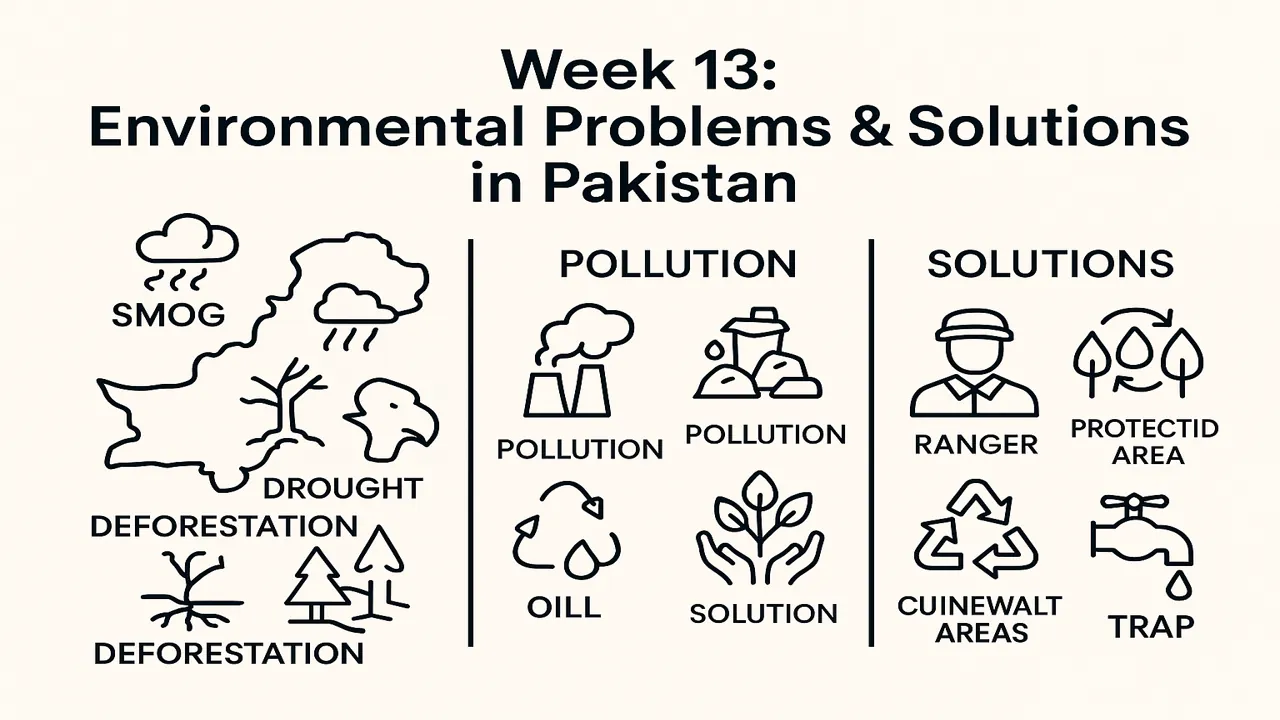
The major environmental problems in Pakistan, their causes, and practical solutions for climate resilience, pollution control, and sustainability.
Introduction
Pakistan faces a variety of environmental problems caused by rapid urbanization, population growth, industrial expansion, and poor management of natural resources. These issues not only damage ecosystems but also threaten economic stability and human health.
Major Environmental Problems in Pakistan
a) Air Pollution
- Causes: Vehicle emissions, industrial smoke, open burning, brick kilns.
- Impacts: Respiratory diseases, smog (especially in Lahore and Faisalabad), reduced visibility, acid rain.
- Solution:
- Use of Euro-5 fuels and catalytic converters.
- Ban on single-use burning and promotion of electric vehicles (EVs).
- Shift to renewable energy (solar and wind).
b) Water Pollution and Scarcity
- Causes: Untreated sewage, industrial discharge, pesticide runoff.
- Impacts: Contaminated drinking water, disease outbreaks, water conflicts.
- Solution:
- Establish water treatment plants.
- Promote rainwater harvesting and drip irrigation.
- Public awareness on water conservation.
c) Deforestation and Habitat Loss
- Causes: Fuelwood collection, illegal logging, urban expansion.
- Impacts: Loss of biodiversity, soil erosion, floods.
- Solution:
- Afforestation programs (Billion Tree, Ten Billion Tree).
- Community-based forest protection.
- Ban on illegal timber trade.
d) Solid Waste Management
- Causes: Unregulated dumping, lack of recycling infrastructure, urban overpopulation.
- Impacts: Soil and water pollution, disease spread, blocked drainage.
- Solution:
- Segregation at source (organic, plastic, metal).
- Modern waste-to-energy projects.
- Strengthening municipal waste authorities.
e) Energy Crisis and Climate Change
- Causes: Overreliance on fossil fuels, inefficient grid systems.
- Impacts: Frequent load shedding, greenhouse gas emissions.
- Solution:
- Invest in solar, wind, and hydropower.
- Promote energy-efficient appliances.
- Implement National Climate Change Policy (2012).
f) Land Degradation and Desertification
- Causes: Overgrazing, poor irrigation, deforestation.
- Impacts: Reduced crop yield, poverty, migration.
- Solution:
- Soil conservation techniques (terracing, contour plowing).
- Community-based land management in arid zones.
Week 12 – Wildlife Conservation in Pakistan: Endangered Species & Protection Efforts
National & Global Environmental Strategies
| Level | Strategy/Organization | Objective |
|---|---|---|
| National | National Environmental Policy (2005) | Pollution control, biodiversity protection |
| Provincial | SEPA, EPA Punjab | Enforcement of environmental laws |
| Global | UNFCCC, SDGs, Paris Agreement | Climate mitigation & sustainable development |
| Community | Local NGOs, youth green clubs | Tree planting, awareness, recycling |
Sustainable Solutions for Pakistan
- Environmental Education: Include sustainability topics in school curricula.
- Green Infrastructure: Promote green roofs, urban forests, and smart cities.
- Renewable Energy Shift: Reduce dependency on oil imports.
- Public-Private Partnerships: Engage businesses in waste management and eco-restoration.
- Data-Driven Policy: Use GIS and remote sensing to track environmental change.
Summary
Pakistan’s environmental problems are interconnected pollution, deforestation, water scarcity, and waste mismanagement amplify the impacts of climate change. Solutions require strong governance, technological innovation, and community participation to ensure a sustainable future.
The approach followed at E Lectures reflects both academic depth and easy-to-understand explanations.
People also ask:
Air pollution and water scarcity are among the most pressing problems.
It increases floods, droughts, glacial melting, and heatwaves.
Launching initiatives like the Ten Billion Tree Tsunami and clean energy projects.
Reduce plastic use, conserve water, plant trees, and recycle waste.
It causes respiratory illness, skin allergies, and long-term diseases.


