

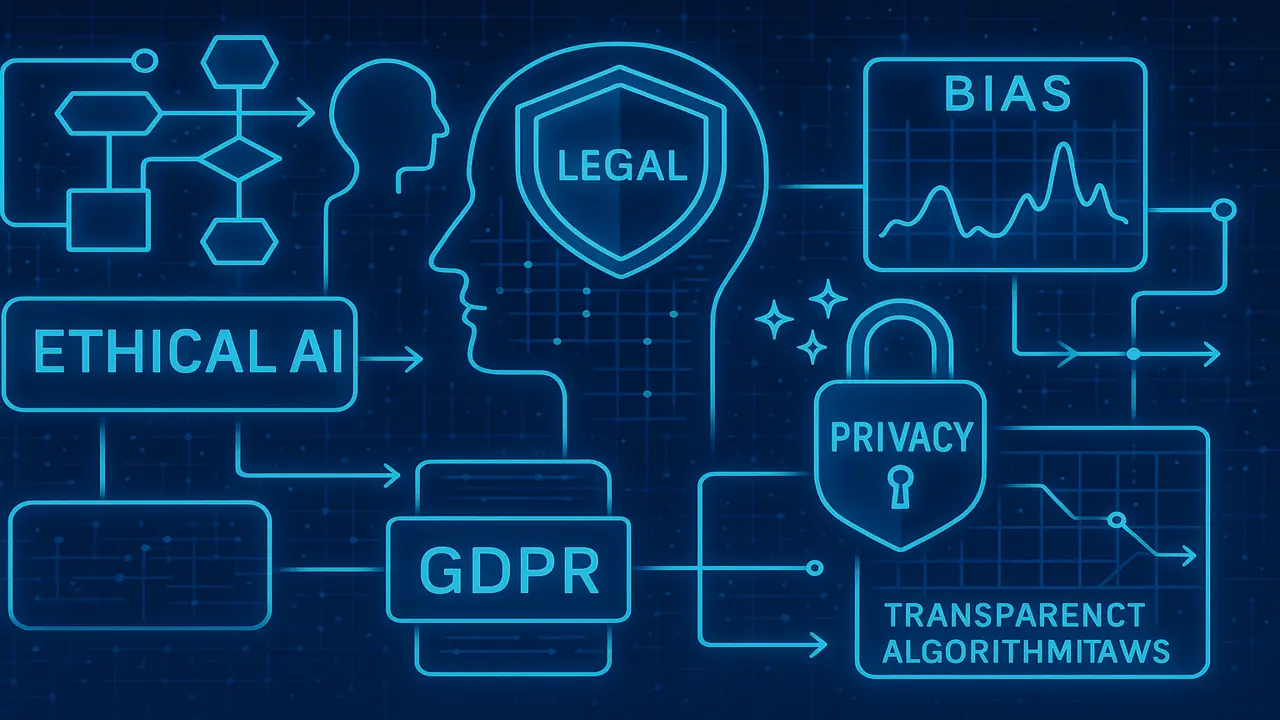
Lecture 11 explored the ethical, legal, and privacy implications of data mining and modern AI systems. Covering laws (GDPR, CCPA, HIPAA), privacy risks, algorithmic bias, fairness, transparency, security threats, and privacy-preserving solutions, this lecture prepares students to think critically about the societal role of AI.
As Data Mining becomes deeply integrated into business, government, healthcare, social media, and daily life, society faces new challenges. AI systems now influence:
- Loan approvals
- Job applications
- Medical diagnoses
- Criminal sentencing
- Online recommendations
- Targeted advertising
This power makes Data Mining not only a technical field but also an ethical, legal, and social responsibility.
In this lecture, we explore the ethical foundations, legal frameworks, privacy concerns, fairness challenges, and emerging solutions for responsible data mining.
Introduction to Ethics in Data Mining
Why Ethics Matters
Data mining algorithms make decisions that affect real people. Unethical systems can:
- Deny opportunities
- Invade privacy
- Promote discrimination
- Manipulate behavior
- Leak sensitive information
The Rapid Rise of AI & Data Concerns
With social networks, IoT devices, phones, and apps collecting everything from location to biometrics, the world generates unimaginable data. This requires ethical guidelines to prevent misuse.
Core Ethical Principles
Transparency
People should know when and how their data is used.
Accountability
Organizations must take responsibility for AI outcomes.
Fairness
Algorithms should not discriminate.
Non-maleficence
AI systems should avoid causing harm.
Privacy & Autonomy
Users must have control over their personal data.
Lecture 10 – Data Mining Implementation Using Python
Privacy Issues in Data Mining
Personal Data vs Sensitive Data
Personal data:
- Name
- Location
Sensitive data:
- Health
- Religion
- Politics
- Biometrics
Sensitive data requires stricter protection.
Data Collection Concerns
Many apps:
- Over-collect data
- Track activity without consent
- Record behavior for targeting
Consent & Unauthorized Use
Example:
Apps collecting microphone data without permission.
Behavioral Tracking
Clickstream tracking can reveal:
- Interests
- Habits
- Daily routine
Surveillance Systems
AI-powered CCTV + face recognition raises:
- Civil rights issues
- Misidentification risks
Legal Frameworks & Data Protection Laws
GDPR (Europe)
General Data Protection Regulation includes:
- Right to be forgotten
- Right to data portability
- Lawful basis of processing
- Large penalties
CCPA (California)
Gives consumers:
- Right to know
- Right to opt-out of sale
- Right to delete personal data
HIPAA (US Health Sector)
Protects:
- Medical records
- Patient health data
COPPA (Children’s Data)
Protects children under 13 from data misuse.
Pakistan’s Data Protection Bill
Includes:
- Consent requirements
- Limited data retention
- Restrictions on biometric data
Ethical Challenges in Data Mining
Algorithmic Bias
Occurs when training data includes inequality.
Discrimination in Predictions
AI may:
- Reject borrowers
- Lower academic scores
- Misclassify minority faces
Lack of Transparency
Black-box models make unexplained decisions.
Dark Patterns
Design tricks that manipulate user behavior.
Examples:
- Forced tracking
- Hidden privacy settings
Data Misuse & Overcollection
“Collect everything” mindset is unethical and risky.
Bias, Fairness & Discrimination
Types of Bias
1. Sampling Bias
Dataset doesn’t represent population.
2. Historical Bias
Society’s past discrimination is encoded into data.
3. Measurement Bias
Faulty sensors or inconsistent labeling.
Disparate Impact vs Disparate Treatment
- Disparate treatment → intentional discrimination
- Disparate impact → unintentional outcome differences
Real-World Case Studies
1. Amazon Hiring AI
AI learned historical male-biased hiring → discriminated against women.
2. COMPAS Criminal Justice System
Assigned higher risk scores to minorities.
3. Facebook Ad Targeting
Allowed advertisers to exclude races (now restricted).
Ensuring Transparency & Explainability
SHAP
Breaks down each feature’s contribution.
LIME
Explains predictions locally.
Model Interpretability Tools
- What-If Tool
- Google Explainable AI suite
Security Risks in Data Mining
Data Breaches
Unsecured databases expose:
- Passwords
- Health data
- Financial info
Model Inversion Attacks
Attackers reconstruct training data from model outputs.
Membership Inference Attacks
Attackers determine whether someone’s data was used for training.
Privacy-Preserving Data Mining
Differential Privacy
Adds noise so individual data cannot be reverse-engineered.
Used by:
- Apple
- US Census
Federated Learning
Model trains on devices → only updates sent to server.
Homomorphic Encryption
Perform computations while data stays encrypted.
Ethical Data Mining Workflow
Governance & Compliance
Organizations must follow laws and policies.
Risk Assessment & Auditing
Regular reviews detect biases and vulnerabilities.
Documentation & Model Cards
Describe:
- Purpose
- Limitations
- Ethical impact
Case Studies (Real-World Examples)
Google DeepMind & NHS
DeepMind used 1.6 million patient records without valid consent.
Facebook Cambridge Analytica
Data mined from millions of profiles influenced elections.
Amazon Alexa Recordings
Voice data stored and manually reviewed.
Equifax Data Breach
143 million users’ personal and financial data exposed.
Summary
Lecture 11 explored the ethical, legal, and privacy implications of data mining and modern AI systems. Covering laws (GDPR, CCPA, HIPAA), privacy risks, algorithmic bias, fairness, transparency, security threats, and privacy-preserving solutions, this lecture prepares students to think critically about the societal role of AI.
People also ask:
Because data decisions influence people’s lives.
Systematic unfairness in model outcomes.
A European law that protects personal data privacy.
Training models without centralizing the data.
By auditing, testing datasets, and using XAI tools.