

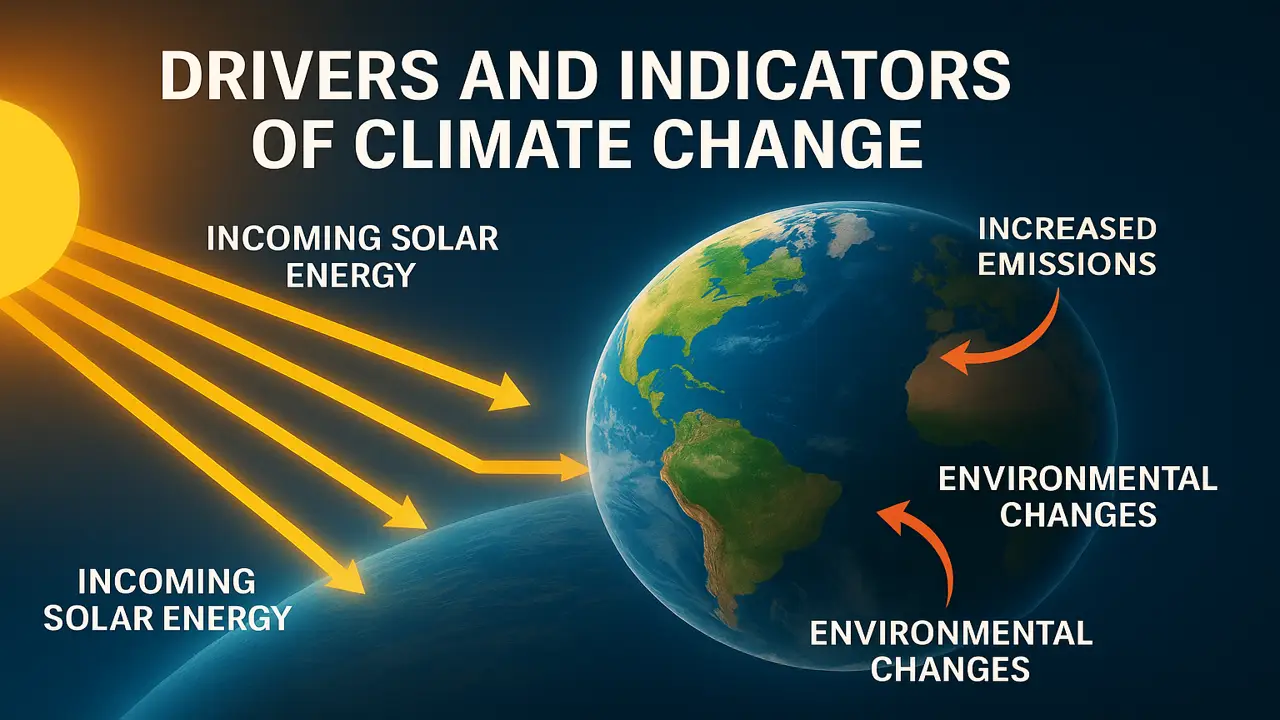
Drivers and Indicators of Climate Change
Explore how the climate system is changing through its key drivers and measurable indicators. Understand the causes, effects, and scientific evidence of climate change in Week 5 of ElecturesAI’s Climate Change course.
Introduction Understanding the Pulse of Our Planet
The climate system is like a living organism constantly shifting, breathing, and responding to changes.
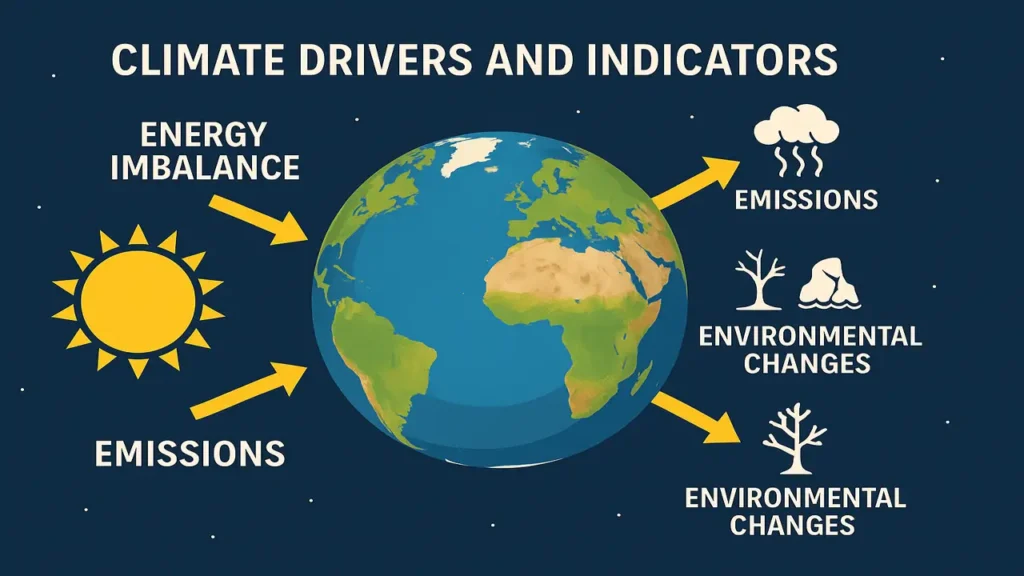
But in recent decades, this natural rhythm has been disrupted. The drivers of climate change are pushing the system out of balance, while indicators reveal how Earth is reacting.
Understanding both helps us not only see the damage but also predict what lies ahead.
For More. Climate Classifications: The Köppen Global Climate System Explained
Drivers of Climate Change What Forces Shape the Climate
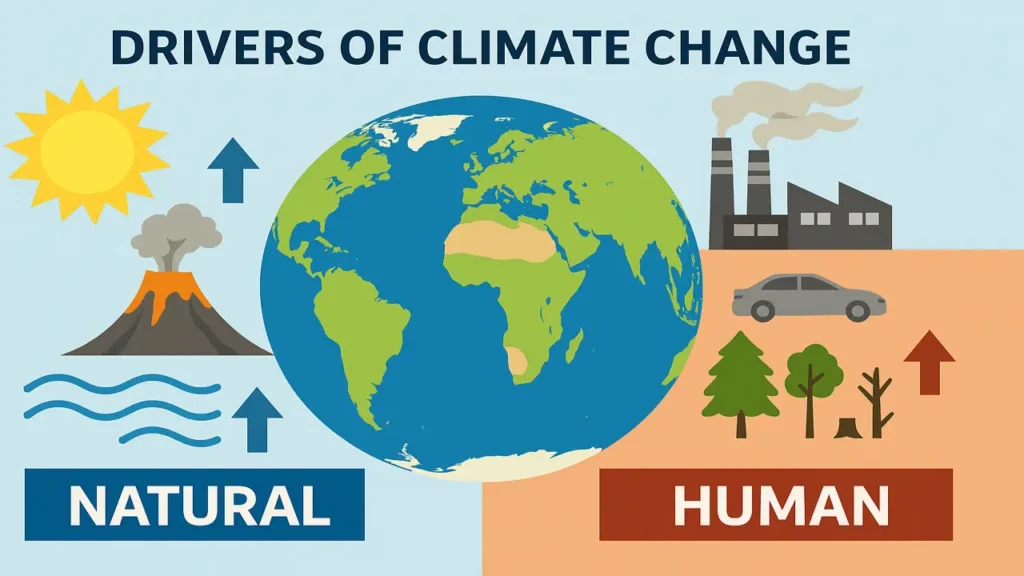
Drivers are the processes or activities that alter the Earth’s energy balance, leading to climate change. These can be natural or anthropogenic (human-made).
A. Natural Drivers
- Solar Radiation Variability: Small changes in solar output affect global temperature cycles.
- Volcanic Eruptions: Release aerosols and ash that block sunlight and temporarily cool the planet.
- Oceanic Circulation: Patterns like El Niño and La Niña redistribute heat and moisture.
- Orbital Changes: Shifts in Earth’s orbit and tilt alter the distribution of sunlight (Milankovitch cycles).
B. Human Drivers
- Fossil Fuel Combustion: CO₂ from coal, oil, and gas is the main driver of current warming.
- Deforestation: Reduces CO₂ absorption and releases stored carbon.
- Industrial & Agricultural Emissions: Methane (CH₄), nitrous oxide (N₂O), and other gases trap additional heat.
- Urbanization: Expands “heat islands” and changes local wind and rainfall patterns.
Together, these drivers fuel the enhanced greenhouse effect, intensifying global warming.
For More. Electromagnetic Radiation and the Global Energy Budget: Understanding Energy and Temperature
Indicators of Climate Change How We Know the Planet Is Changing
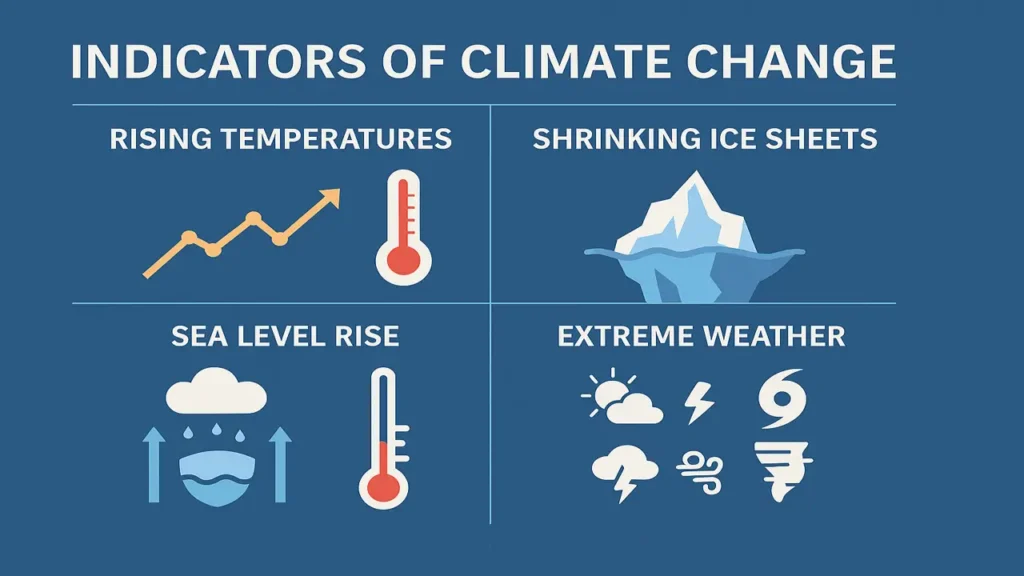
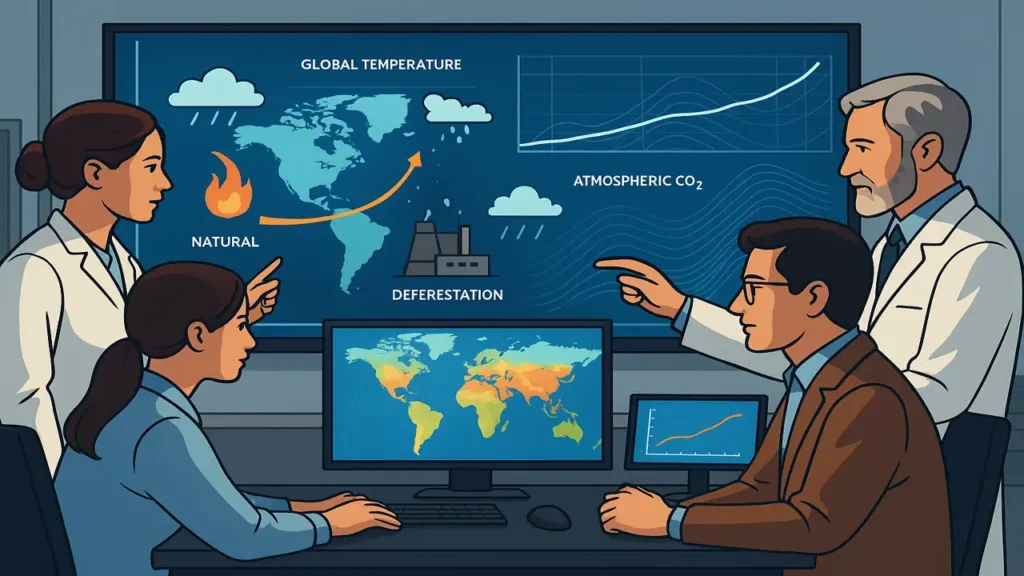
Scientists monitor indicators measurable signs within the climate system that confirm long-term change.
These observations come from satellites, ocean buoys, ice cores, and global weather stations.
A. Temperature Indicators
- Global Surface Temperature: The planet has warmed by about 1.2 °C since 1880.
- Ocean Heat Content: Oceans absorb over 90% of excess heat, causing thermal expansion.
B. Cryosphere Indicators
- Glacial Retreat: Mountain glaciers are shrinking worldwide.
- Arctic Sea Ice Loss: Summer ice has decreased by more than 40% since 1980.
- Permafrost Thaw: Releases methane, accelerating warming.
C. Atmospheric & Oceanic Indicators
- Sea-Level Rise: Rising at about 3.3 mm per year, mainly from melting ice and expansion.
- Ocean Acidification: CO₂ absorbed by oceans lowers pH, harming coral and shell life.
- Extreme Weather Events: Heat waves, floods, and droughts are increasing in frequency and intensity.
For More. Defining Climate and the Climate System: Understanding Earth’s Balance
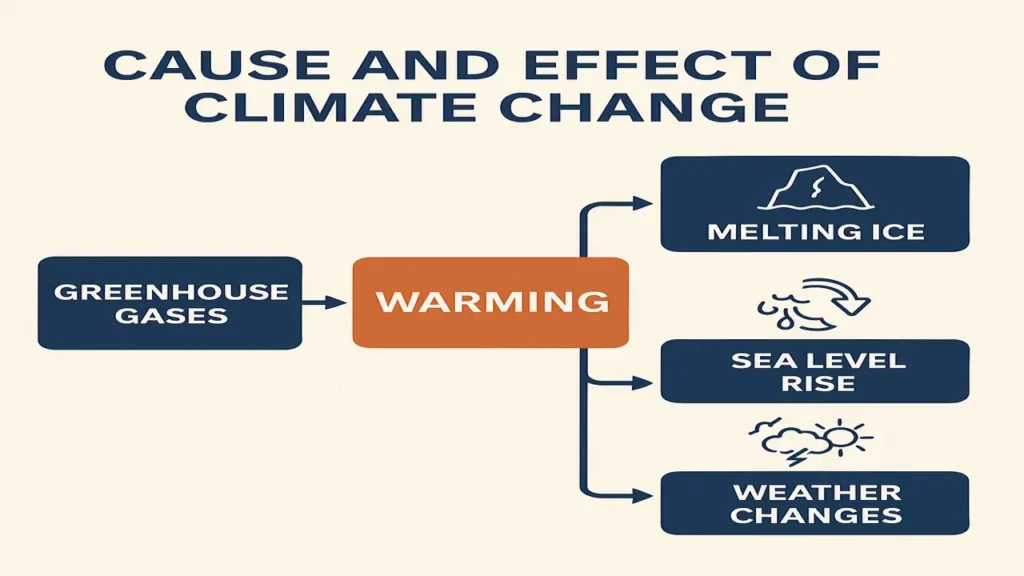
Cause and Effect The Climate Domino Chain
Every driver sets off a chain reaction of effects that ripple across the climate system.
A. The Cause
- Increased greenhouse gases → more trapped infrared radiation.
- Energy imbalance → rising global temperatures.
B. The Effect
- Melting Ice & Sea-Level Rise: Threaten coastal cities and ecosystems.
- Heatwaves & Droughts: Impact agriculture and water resources.
- Storm Intensification: More powerful hurricanes and cyclones.
- Ecosystem Shifts: Species migrate or go extinct as habitats change.
- Human Health Risks: Heat stress, vector-borne diseases, and food insecurity.
These cause-and-effect cycles amplify one another, creating feedback loops that make the system harder to stabilize.
Why Measuring Indicators Matters
Indicators act as vital signs of Earth’s health.
They help scientists:
- Track progress or decline in global climate stability.
- Build predictive models for future climate scenarios.
- Support international agreements like the Paris Accord.
Monitoring these indicators allows policymakers to turn data into action because what we can measure, we can manage.
Summary Seeing the System as a Whole
Week 5 reveals that climate change is not random it’s the result of identifiable drivers and measurable indicators within the climate system.
By studying both, scientists can understand not only why our planet is changing but also how fast and how severely.
Next week, we’ll explore Human responses to potential climate change; Climate Change policy, diving deeper into how the atmosphere traps heat and circulates energy.