
Understanding Electromagnetic Radiation and Earth’s Energy Balance
Learn how electromagnetic radiation powers the climate system. Discover Earth’s global energy budget, energy transfer, and temperature regulation in Week 2 of ElecturesAI’s Climate Change course.
Introduction The Source of All Climate Energy
Every movement of wind, ocean current, and weather system begins with one force the Sun. The Sun emits a continuous flow of electromagnetic radiation, which provides nearly all the energy driving Earth’s climate. Understanding how this radiation interacts with our planet helps explain why some regions are hot and others cold, and why climate change disrupts global balance.
For More.. Defining Climate and the Climate System: Understanding Earth’s Balance
What Is Electromagnetic Radiation?
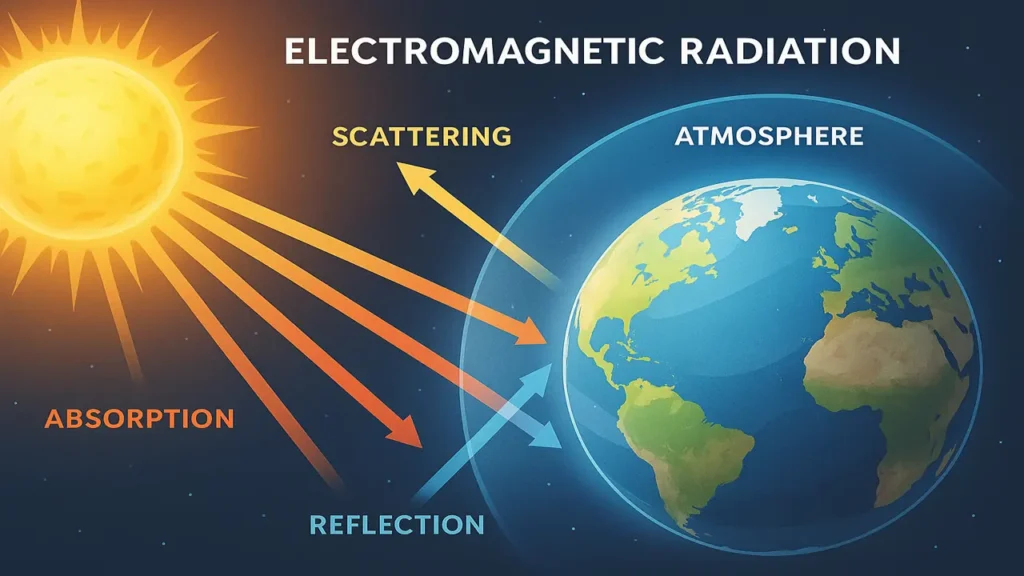
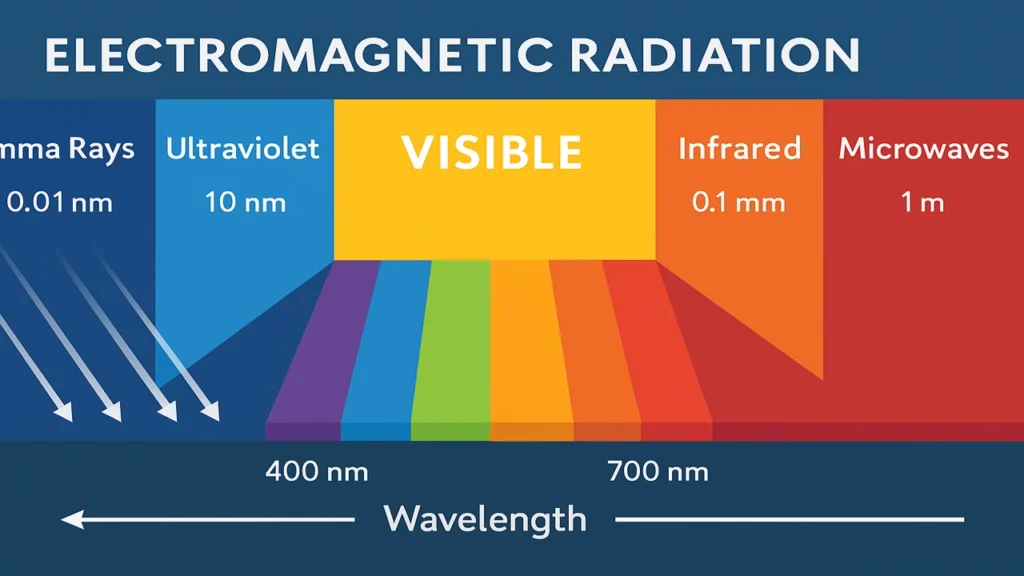
Electromagnetic radiation is energy that travels in waves, including visible light, ultraviolet (UV), and infrared (IR). The Sun emits all these types, but Earth absorbs only part of them.
- Shortwave radiation: High energy, from sunlight (visible and UV).
- Longwave radiation: Lower energy, emitted by Earth as infrared heat.
The balance between incoming shortwave and outgoing longwave energy determines Earth’s temperature.
The Global Energy Budget
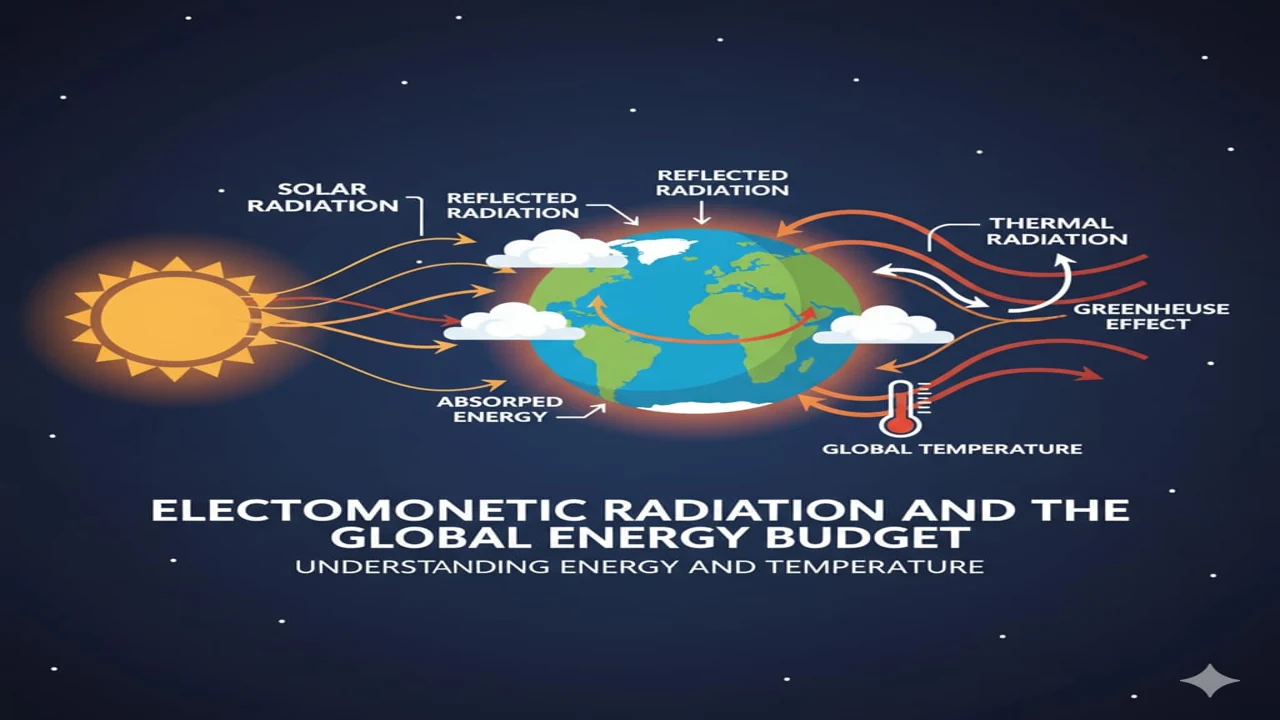
Earth’s global energy budget describes how energy from the Sun is absorbed, reflected, stored, and released. It’s a delicate balance that maintains global temperature and supports life.
Energy Inputs
- 100% of incoming solar radiation reaches the atmosphere.
- 30% is reflected back to space (by clouds, air particles, and bright surfaces like snow).
- 70% is absorbed by Earth’s surface and atmosphere.
Energy Outputs
- Earth emits infrared (longwave) radiation back into space.
- Greenhouse gases trap some heat, keeping the planet warm — a process known as the greenhouse effect.
If energy input = energy output → stable climate.
If not → warming or cooling trends occur.

Energy Transfer and Temperature Regulation
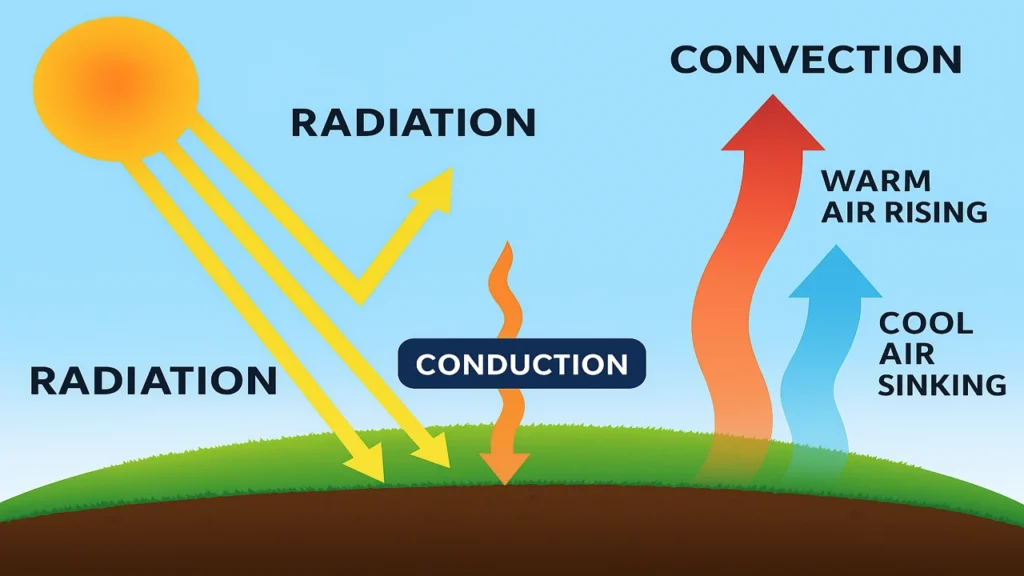
Once absorbed, solar energy doesn’t stay still it moves through three main processes:
- Radiation: Heat transfer through electromagnetic waves (e.g., sunlight warming your skin).
- Conduction: Transfer between surfaces in contact (e.g., ground heating air).
- Convection: Movement of warm and cool air or water (e.g., rising hot air currents).
These processes regulate global and local temperatures, ensuring that polar regions stay cold while equatorial areas remain warm.
Energy, Temperature, and Climate Feedbacks
The relationship between energy and temperature defines how climate behaves.
- When energy absorbed > energy lost, temperatures rise (global warming).
- When energy lost > energy absorbed, temperatures fall (global cooling).
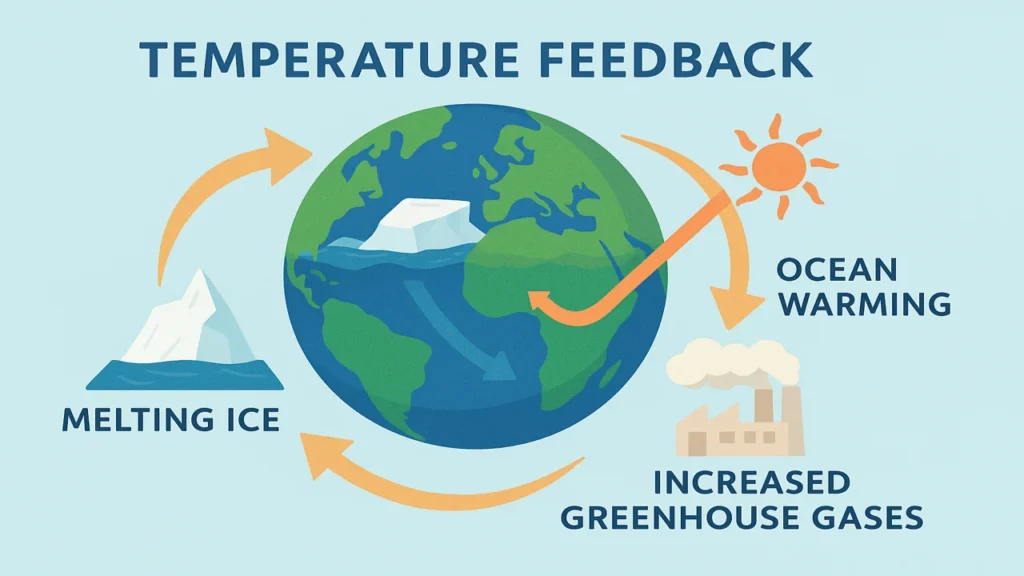
This energy imbalance can trigger feedback loops:
- Melting ice reduces reflectivity → more heat absorbed → more melting.
- Warmer oceans release CO₂ → amplifies greenhouse effect.
Understanding these feedbacks is crucial for predicting climate change.
Why This Matters
The global energy budget explains why Earth’s climate is stable or why it’s changing.
Human activities that alter radiation balance (through greenhouse gases, aerosols, or land use) affect every climate process introduced in Week 1.
By grasping radiation and temperature relationships, students can interpret climate models, forecast environmental changes, and design solutions for sustainability.
Summary
Week 2 reveals the energetic heartbeat of our planet the constant flow of sunlight and heat that makes life possible.
From radiation to reflection, every watt of energy shapes Earth’s climate system.
Next week, we’ll explore “The Greenhouse Effect and Atmospheric Processes”, building on this energy foundation.