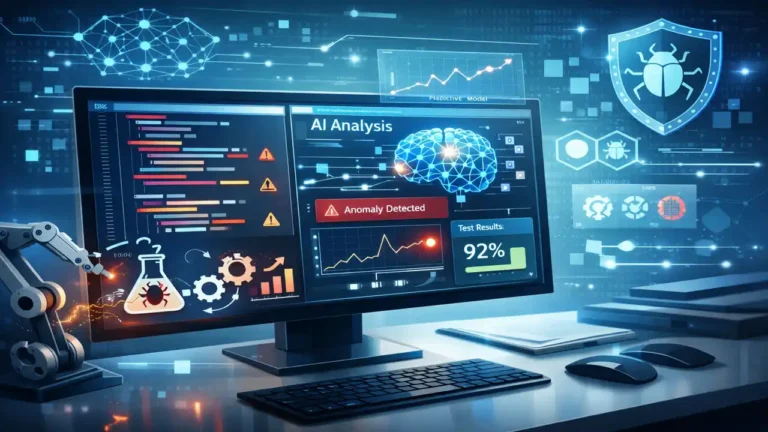

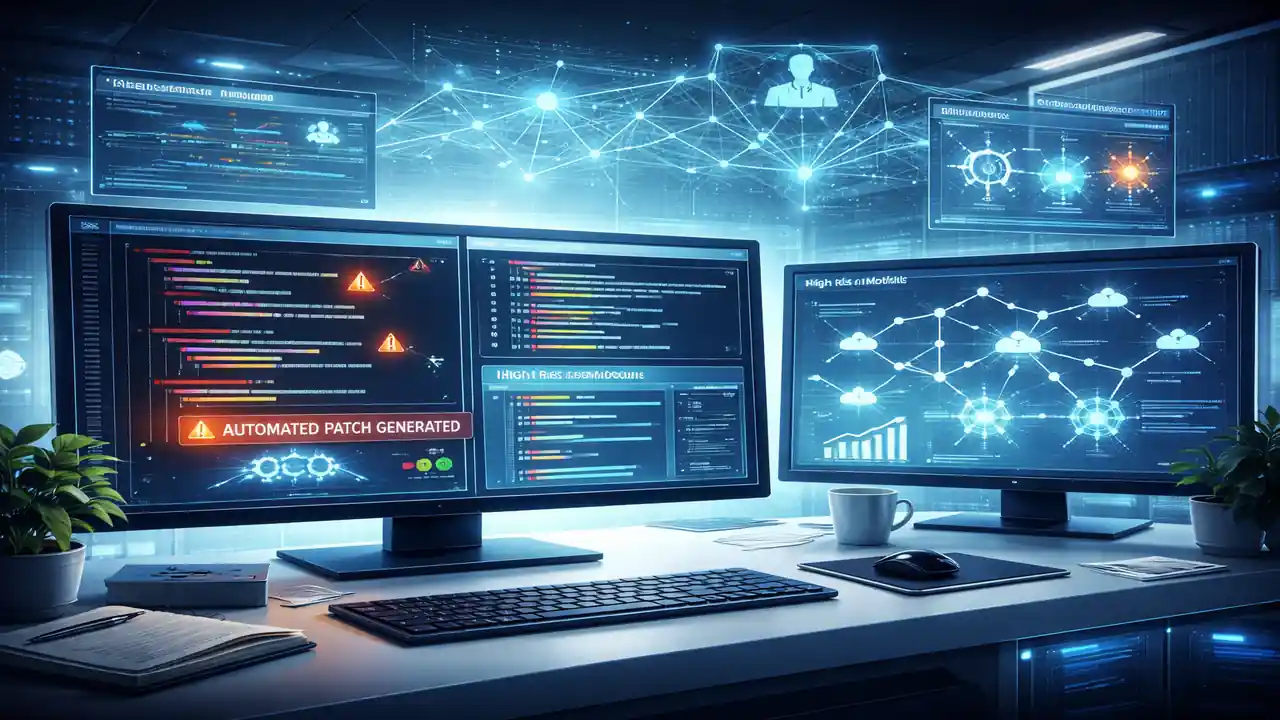
Week 9 focuses on one of the most critical and cost-intensive phases of the Software Development Life Cycle (SDLC): Intelligent software maintenance and evolution. As software systems grow in size and complexity, maintaining code quality, fixing defects, and evolving systems efficiently becomes increasingly challenging. Artificial Intelligence (AI) and Machine Learning (ML) play a transformative role in automating and optimizing maintenance activities, enabling predictive insights, faster repairs, and smarter refactoring decisions.
This week explores how intelligent techniques improve bug prediction, automated program repair, and software refactoring, helping organizations reduce technical debt and extend software longevity.
Bug Prediction and Localization Using Machine Learning
Bug prediction and localization aim to identify which software modules are most likely to contain defects and pinpoint their probable locations before failures occur. Traditional debugging methods are reactive and time-consuming. In contrast, machine learning-based bug prediction uses historical project data to proactively detect risk-prone components.
ML models analyze features such as:
- Code complexity metrics (Cyclomatic Complexity, LOC)
- Change history and commit frequency
- Developer activity and code churn
- Past defect patterns
By learning from historical defect data, these models can classify files or modules as high-risk, allowing teams to prioritize testing and code reviews more effectively.
Bug localization further narrows down the issue by mapping bug reports, logs, and stack traces to specific lines or files of code using NLP and classification models. This significantly reduces debugging time and improves maintenance efficiency.
Key Benefits of ML-based Bug Prediction and Localization:
- Early identification of defect-prone modules
- Reduced debugging and testing effort
- Better resource allocation during maintenance
- Improved software reliability and stability
Automated Program Repair Using AI
Automated Program Repair (APR) is one of the most active and impactful research areas in intelligent software engineering. APR techniques aim to automatically generate patches for software defects without human intervention or with minimal developer input.
AI-driven repair systems typically follow a pipeline:
- Detect the fault using test failures or static analysis
- Generate candidate patches using search-based or learning-based methods
- Validate patches against test suites
- Select the most optimal fix
Common AI techniques used in automated repair include:
- Genetic algorithms and evolutionary search
- Deep learning models trained on code repositories
- Pattern mining from historical bug-fix commits
- Neural machine translation for code-to-code transformation
These systems can repair common issues such as null pointer exceptions, boundary errors, and logical faults with high accuracy.
Advantages of Automated Program Repair:
- Faster bug resolution and reduced downtime
- Lower maintenance costs
- Consistent and repeatable fixes
- Support for continuous integration pipelines
As software systems scale, automated repair tools become essential for maintaining velocity without sacrificing quality.
Intelligent Software Refactoring Recommendations
Refactoring improves code structure and maintainability without changing external behavior. However, identifying when and where to refactor is often subjective and developer-dependent. AI introduces a data-driven approach to refactoring decisions.
Intelligent refactoring systems analyze:
- Dependency graphs and coupling metrics
- Code smells and architectural violations
- Class cohesion and inheritance depth
- Maintainability and readability indicators
Using ML models and graph-based analysis, these systems recommend refactoring actions such as:
- Method extraction
- Class decomposition
- Dependency reduction
- Architectural restructuring
Some advanced tools can even automatically apply refactorings, ensuring code quality improves continuously as the system evolves.
Benefits of AI-driven Refactoring:
- Reduced technical debt
- Improved maintainability and scalability
- Cleaner architecture over time
- Enhanced developer productivity
Why Intelligent Maintenance Matters
Software maintenance consumes the majority of a system’s lifecycle cost. By integrating AI-driven bug prediction, automated repair, and intelligent refactoring, organizations can shift from reactive maintenance to predictive and adaptive evolution.
Week 10 equips students with practical and research-oriented knowledge of how intelligent systems:
- Anticipate failures before they occur
- Automatically fix defects at scale
- Guide long-term software evolution intelligently
These techniques are foundational for building self-healing and sustainable software systems, a key direction in modern software engineering.