

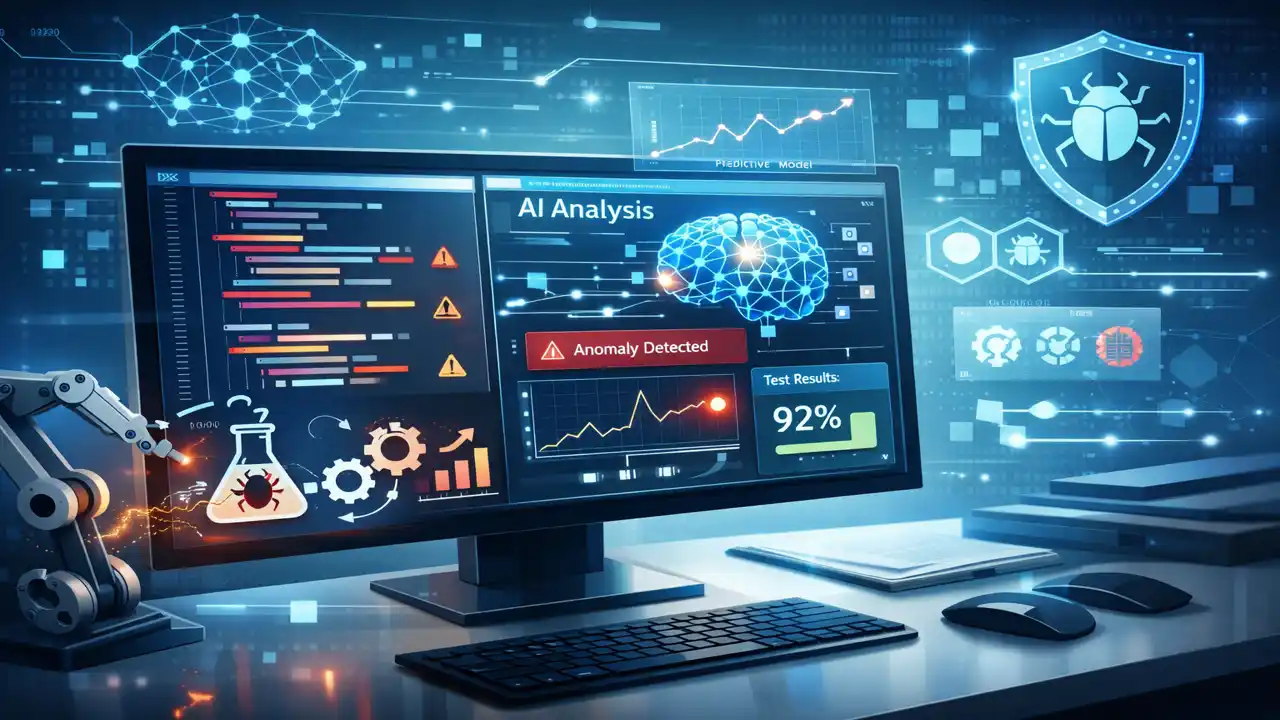
In Week 8 of the Intelligent Software Engineering (ISE) course, we delve deeper into advanced AI-driven testing strategies that go beyond traditional methods. As software systems become more complex, the need for intelligent testing techniques has grown. AI-powered testing provides more robust, efficient, and scalable solutions, ensuring that modern software can meet high-quality standards in less time. In this week, students will explore cutting-edge testing approaches such as fuzz testing, AI components testing, and predictive performance/load testing.
Fuzz Testing and Vulnerability Detection Using Evolutionary Algorithms and ML
Fuzz testing is an essential method used to identify software vulnerabilities by inputting unexpected or random data into a program. Traditional fuzz testing methods can only cover a limited range of test cases. However, with the integration of evolutionary algorithms and machine learning (ML), fuzz testing becomes more powerful. ML algorithms allow the system to evolve and generate more diverse, intelligent test cases that can identify edge cases and bugs that would typically be missed. This AI-enhanced fuzz testing technique ensures that software vulnerabilities are detected earlier in the development lifecycle, reducing the risk of security breaches and ensuring a robust final product.
By leveraging ML’s ability to analyze and improve test cases dynamically, testing becomes more thorough, targeted, and adaptive to the complexity of modern software systems. The intelligent fuzz testing process can learn from the outcomes of previous tests, improving the generation of test cases based on the software’s characteristics and past vulnerabilities.
Key Benefits of AI-Enhanced Fuzz Testing:
- Increased Coverage: ML-driven fuzz testing generates more diverse test cases, covering more scenarios than traditional methods.
- Faster Vulnerability Detection: By automating the process of identifying bugs, the software testing lifecycle is shortened, leading to faster development cycles.
- Real-time Adaptation: The ML algorithms can learn and adapt to new threats in real-time, providing continuous improvements to testing effectiveness.
Testing AI Components: Challenges and Techniques
As AI systems grow in complexity, testing these systems presents unique challenges. Unlike traditional software, AI systems learn and evolve over time, which means their behavior can change dynamically based on data. Testing these systems requires specialized techniques to ensure they perform as expected, especially in real-world applications.
One key testing challenge is ensuring the reliability and stability of AI models as they may not behave predictably under all conditions. This is where techniques like adversarial examples and robustness testing come into play.
- Adversarial Examples: These are inputs designed to fool AI models into making incorrect predictions or classifications. By testing AI systems with adversarial examples, we can assess their resilience to unusual or deceptive data inputs. This type of testing is crucial for evaluating AI’s performance in situations where the model might encounter data it wasn’t trained on.
- Robustness Testing: This involves testing AI systems in a variety of environments to ensure that they remain accurate and functional even when exposed to noisy, incomplete, or conflicting data. Robustness testing helps identify model weaknesses and provides insights into how AI systems can be improved to handle real-world variability.
Key Benefits of AI Component Testing:
- Identifying Vulnerabilities: Techniques like adversarial testing reveal weaknesses that may lead to incorrect behavior in AI models.
- Ensuring Generalization: Testing helps ensure that AI models generalize well across various use cases, improving the model’s reliability and applicability.
- Improving Robustness: Continuous robustness testing helps ensure that AI models can adapt and perform well under unpredictable conditions.
Performance and Load Testing Driven by Intelligent Prediction
Performance and load testing is a vital part of the software testing process, ensuring that software applications can handle large-scale operations and high volumes of traffic. Traditional load testing involves simulating traffic and measuring how the system responds under load. However, AI and predictive models offer a more intelligent approach to performance and load testing.
By integrating predictive AI models into the performance testing process, we can simulate how software will behave under various conditions, helping to forecast the software’s response before deployment. This allows developers to understand how the system will scale under stress and ensure that it can handle increased demand efficiently.
AI models can predict bottlenecks, response times, and other performance metrics, allowing engineers to identify areas for optimization before issues arise in production. Additionally, AI can predict how performance might change as the software is updated, providing valuable insights into long-term software stability.
Key Benefits of Intelligent Performance Testing:
- Improved Scalability Testing: AI models can predict system performance under varying loads, helping to optimize infrastructure requirements.
- Proactive Issue Detection: Predictive models identify potential bottlenecks early, minimizing performance degradation in production.
- Time Efficiency: AI-driven testing reduces the need for extensive manual simulations by predicting software behavior accurately.
Why AI-driven Testing is the Future
The combination of machine learning, predictive analytics, and advanced testing techniques offers unprecedented opportunities for software engineers to optimize and automate the testing process. With AI-driven testing, teams can achieve higher accuracy, faster testing cycles, and better performance metrics, ultimately leading to more robust, secure, and reliable software.
As the complexity of software systems continues to grow, embracing these intelligent testing strategies will become increasingly crucial in maintaining the quality and security of software. Week 9 of the course equips students with the knowledge and tools to leverage AI for more intelligent, efficient, and effective software testing, preparing them for the challenges of tomorrow’s software engineering landscape.