
Learn the basics of data structures in computer science with simple examples. Covers primitive and non-primitive types, operations, differences, and importance in programming & AI.
Introduction to Data Structures 2025
Data structures are the foundation of computing. They define how information is stored, organized, and accessed, which directly impacts program efficiency. Whether in basic coding or advanced Artificial Intelligence (AI), the correct choice of data structure determines success.
What is Data?
At its simplest, data is a collection of raw facts.
- By themselves, numbers, symbols, or characters have no meaning.
- Once processed and given context, they become information.
Example:
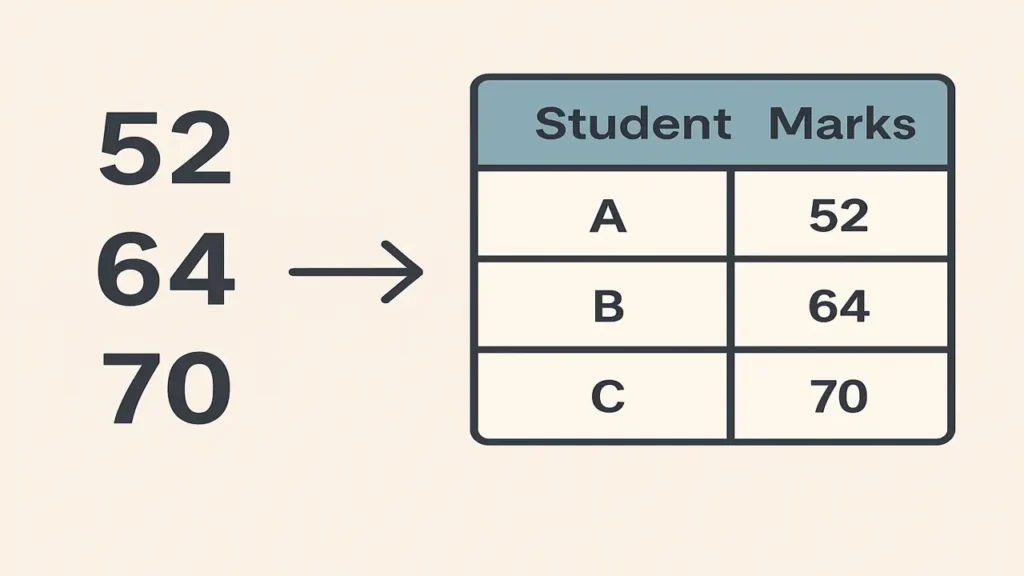
52, 64, 70→ Raw data (just numbers)"Marks of students in a Math test"→ Information (meaningful data)
What is a Data Structure?
A data structure is a specialized way of organizing and storing data in memory to use it efficiently.
Formula:
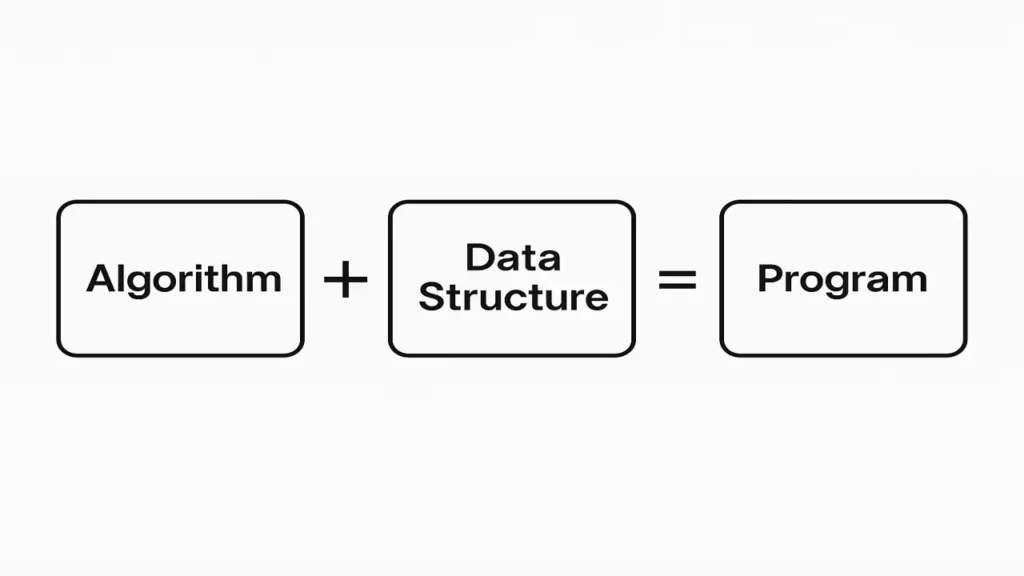
👉 Program = Algorithm + Data Structure
- Algorithms = Steps to solve a problem.
- Data structures = How the data is organized.
- Together → Efficient program.
Classification of Data Structures
Data structures are classified into two main categories:
1. Primitive Data Structures
Basic building blocks understood directly by the computer.
Examples:
- Integer →
10, -25, 4500 - Float →
3.14, -25.67 - Character →
'A', 'b', '9' - String →
"Hello World" - Boolean →
True / False - Pointers → Store memory addresses
Operations: Create, Select, Update, Delete
2. Non-Primitive Data Structures
Built using primitive types; more complex and powerful.
Types:
(a) Linear Data Structures
Elements stored sequentially.
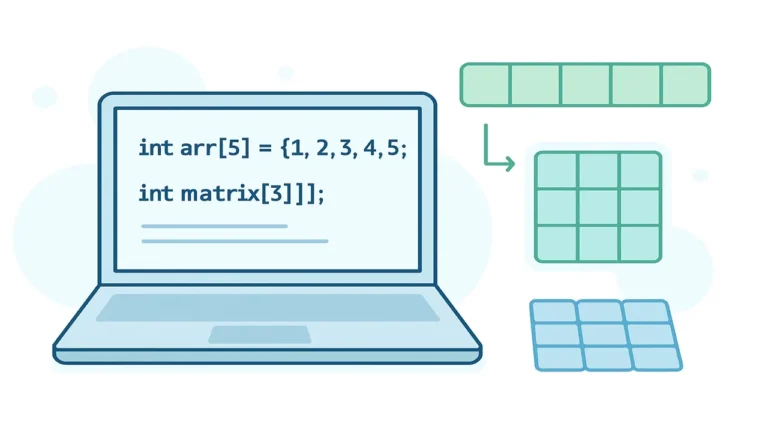
- Array → Like a bookshelf (contiguous memory).
- Linked List → Nodes connected with pointers.
- Stack → LIFO (Last In, First Out), like plates.
- Queue → FIFO (First In, First Out), like a cinema line.

(b) Non-Linear Data Structures
Elements arranged hierarchically or in networks.
- Tree → Hierarchical (like a family tree or file system).
- Graph → Networked data (like Facebook friends).

Digital Logic Design (DLD) – Foundation of Computing
Common Operations on Data Structures
- Traversal → Visit all elements.
- Insertion → Add element.
- Deletion → Remove element.
- Searching → Find element.
- Sorting → Arrange elements.
- Merging → Combine structures.
Difference Between Primitive & Non-Primitive Data Structures
| Feature | Primitive DS | Non-Primitive DS |
|---|---|---|
| Definition | Built-in basic types | Complex, built from primitives |
| Examples | int, float, char, string | Array, Linked List, Tree, Graph |
| Memory | Simple, fixed | Complex, dynamic |
| Relationship | Independent elements | Inter-related elements |
| Operations | Create, update, delete | Insert, search, sort, traverse, merge |
Importance of Data Structures in Programming & AI
- Efficiency → Faster programs
- Memory Management → Avoids wastage
- Scalability → Handles big data (databases, AI models)
- Problem Solving → Used in routing, scheduling, predictions
📌 AI Examples:
- Neural Networks = Graph structures of nodes.
- Search Engines = Trees + Hash Tables for quick lookups.
Conclusion
Data structures are the backbone of computing & AI.
- Primitive → Simple and built-in
- Non-Primitive → Complex and problem-solving
From arrays in student records to graphs in neural networks, data structures power every digital system.
People also ask:
We use data structures to store and organize data in a way that makes operations faster and more efficient. They help us solve real problems with better performance.
Arrays, linked lists, stacks, queues and trees remain the core foundation. We build advanced systems by understanding how these basics behave in memory.
Once we know how each structure works, we write cleaner logic, reduce processing time and design solutions that scale for modern applications.