
Climate change is not just an environmental issue it is a human health crisis. Rising temperatures, pollution, and extreme weather events have begun to affect physical comfort, mental health, and the social behavior of communities worldwide.
Understanding how humans react and adapt to these changes helps policymakers design better health strategies and sustainable lifestyles for the future.
Climate Change and Human Health
Human health is directly linked to environmental stability. As climate patterns shift, the world faces growing health challenges that affect every age group and region.
- Heat-Related Illnesses:
Prolonged heatwaves increase risks of dehydration, heatstroke, and cardiovascular stress. - Air Pollution:
Increased emissions lead to respiratory issues such as asthma and chronic bronchitis. - Vector-Borne Diseases:
Warmer climates expand mosquito habitats, spreading diseases like malaria, dengue, and Zika. - Water-Borne Diseases:
Flooding contaminates water supplies, increasing cholera and typhoid cases. - Mental Health:
Natural disasters and displacement trigger anxiety, trauma, and depression.
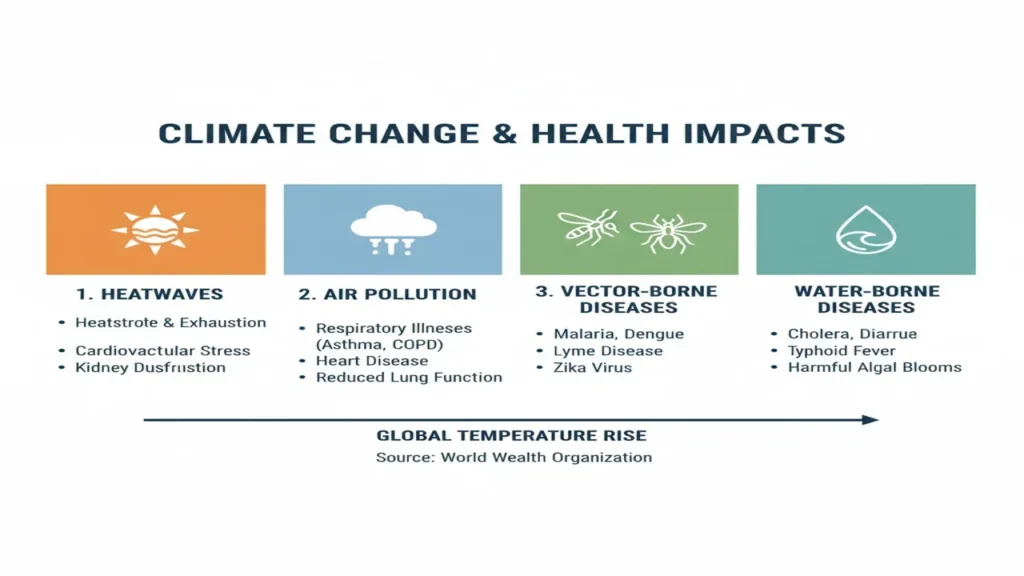
Here are some climate change impacts that can affect our environment, please take look.
Thermal Comfort and Physical Well-being
Climate change alters how comfortable humans feel in their surroundings.
Thermal comfort depends on air temperature, humidity, wind, and radiant heat all of which are shifting due to global warming.
- Urban areas face heat island effects, where cities become much warmer than rural surroundings.
- Rising humidity reduces the body’s ability to cool through sweating.
- Indoor spaces now require more energy for cooling, increasing carbon emissions further.
- Lack of comfort affects sleep quality, productivity, and overall mental wellness.
A very similar article you may like:
Present Rapid Warming Projection of Future
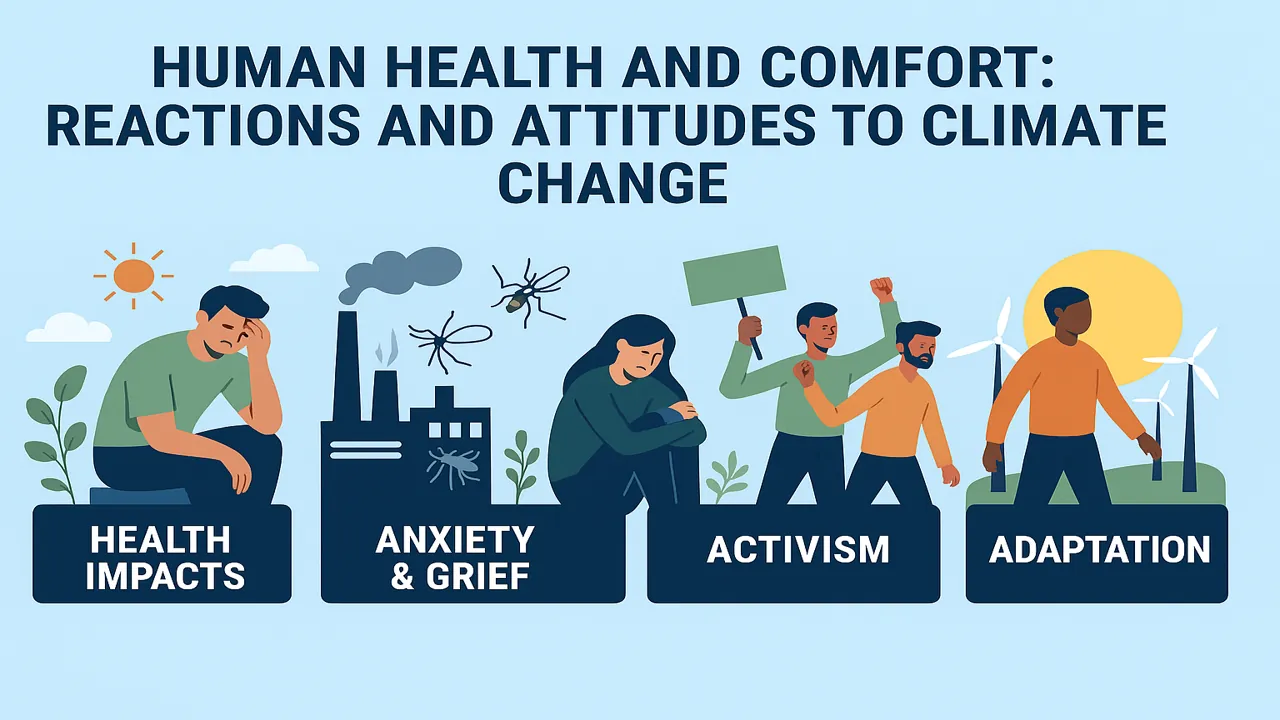
Reactions to Climate Change
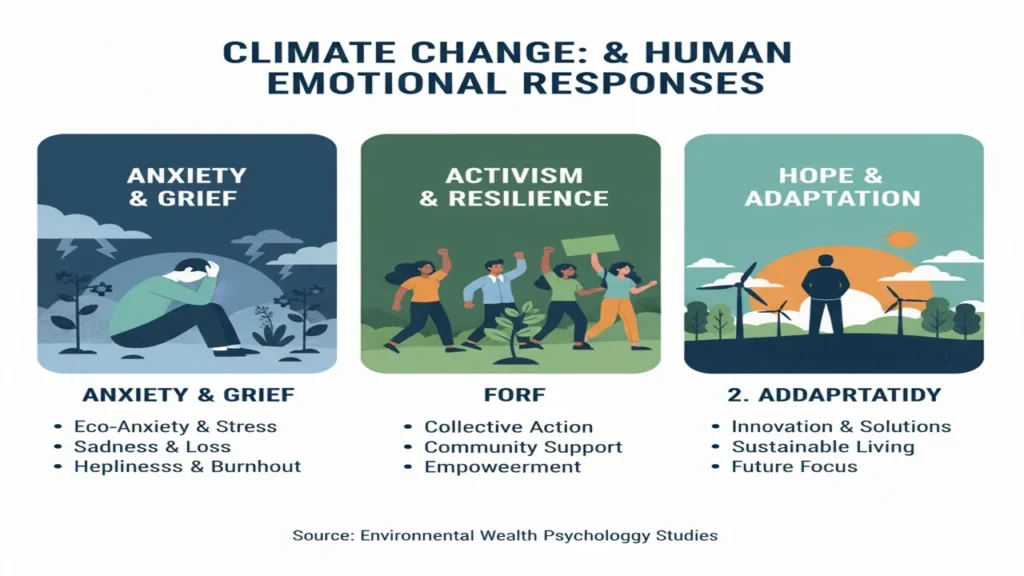
People react to climate change in many ways emotionally, behaviorally, and socially.
The reactions can range from denial and indifference to proactive adaptation and activism.
- Psychological Responses: Anxiety and hopelessness are common, especially among youth (“eco-anxiety”).
- Social Behavior: Some communities organize for climate action; others resist due to misinformation or economic fear.
- Cultural Influences: Traditional societies tied to agriculture and nature are more responsive to visible environmental changes.
- Media and Education: Awareness campaigns play a vital role in shaping how individuals react and adapt.
Attitudes Toward Climate Action
Human attitudes determine how societies respond to climate threats.
Positive attitudes lead to sustainable choices, while apathy delays progress.
- Proactive Attitudes:
People engage in recycling, energy conservation, and sustainable transport. - Resistant Attitudes:
Some dismiss climate change due to misinformation or perceived inconvenience. - Youth Movements:
Global student campaigns demand environmental justice and policy reform. - Civic Engagement:
Local initiatives such as tree planting, waste reduction, and renewable projects show community-level hope.
Building Climate-Resilient Health Systems
To protect public health and comfort in a changing climate, we must:
- Strengthen healthcare infrastructure to handle climate-induced diseases.
- Invest in early-warning systems for heatwaves and air quality alerts.
- Promote climate education to encourage responsible behavior.
- Integrate mental health support into disaster response programs.
Conclusion
The relationship between climate change and human well-being is undeniable.
Our health, comfort, and collective future depend on how we react and adapt today.
Shifting public attitudes from concern to action is the key to ensuring a healthier and more sustainable tomorrow.
People also ask:
People’s reactions vary based on their education, beliefs, political views, and how directly they’re affected by climate impacts like floods or heatwaves.
Some deny it due to misinformation, economic interests, or distrust in science. Others find it difficult to accept because it challenges their lifestyle or worldview.
Awareness and concern are increasing globally, especially among younger generations who see it as an urgent issue needing action.