Human Responses to Potential Climate Change & Climate Change Policy
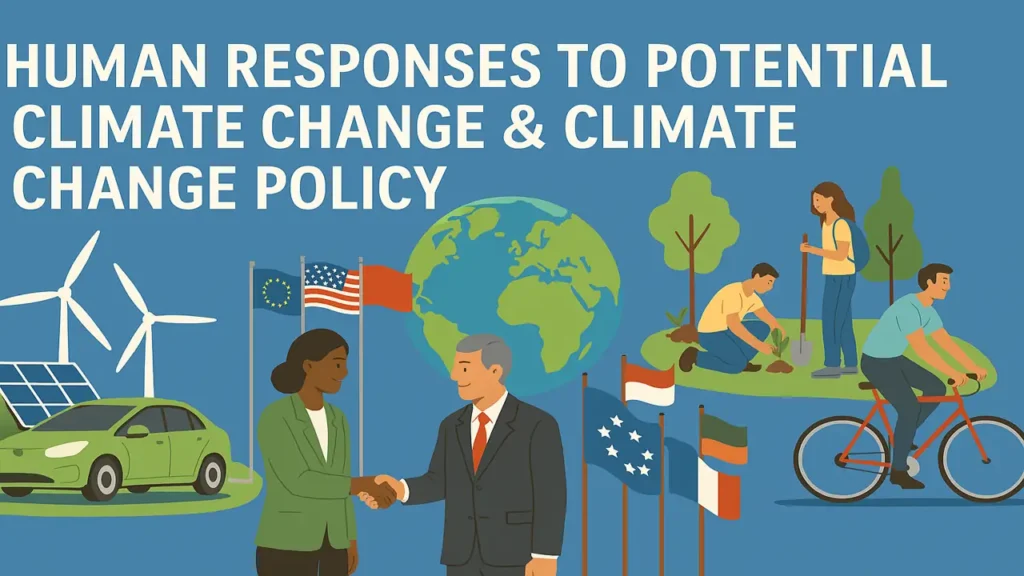
Human Responses to Potential Climate Change & Global Climate Policy | Week 6 – ElecturesAI
Human Responses to Potential Climate Change focus on how people, governments, and organizations act through adaptation, mitigation, and climate policy. Explore global efforts to build resilience, promote sustainability, and protect the planet for future generations.
Introduction From Observation to Action
The Earth’s climate system is changing faster than ever recorded in human history. After decades of observation and analysis, the next challenge is how humans respond.
Responses can be grouped into two pillars:
- Mitigation → tackling the causes of climate change.
- Adaptation → managing its consequences.
Alongside these, climate policy provides the legal and institutional framework that transforms science into coordinated global action.
Week 5 – Drivers and Indicators of Climate Change
Mitigation Reducing the Causes of Climate Change
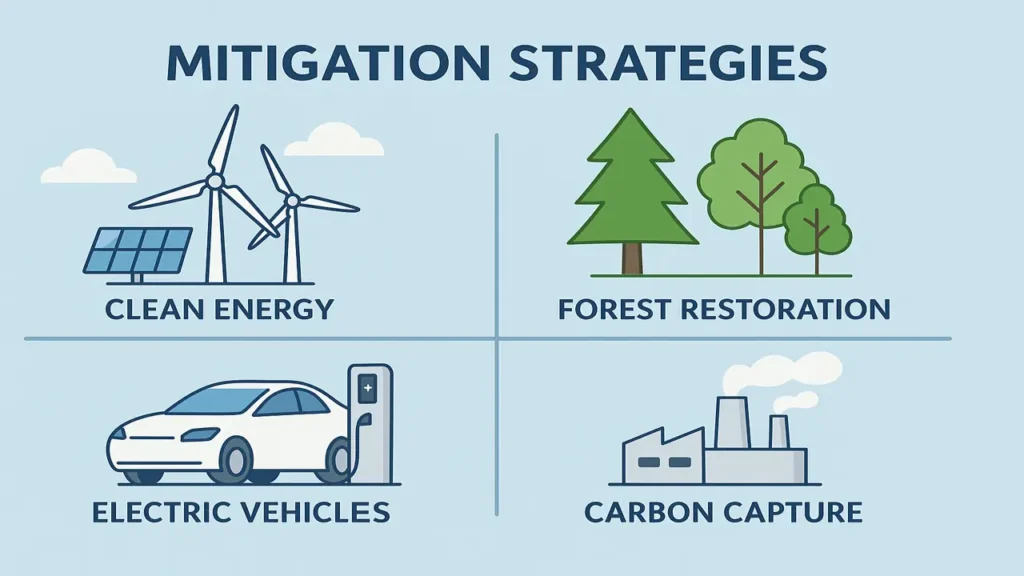
Mitigation focuses on reducing greenhouse-gas emissions and stabilizing the atmosphere. It aims to prevent future warming rather than merely endure it.
Key Mitigation Strategies
- Clean Energy Transition: Expanding solar, wind, hydro, and geothermal sources.
- Energy Efficiency: Improving transport systems, buildings, and industry efficiency.
- Reforestation & Afforestation: Restoring natural carbon sinks.
- Sustainable Agriculture: Limiting methane and fertilizer-related emissions.
- Circular Economy: Minimizing waste through reuse and recycling.
Every ton of carbon avoided is a direct investment in the planet’s stability.
Week 4 – Defining Climate Change and Its Sources
Adaptation Adjusting to Inevitable Change
Even with deep emission cuts, some impacts of climate change are unavoidable. Adaptation strengthens resilience and protects communities from harm.
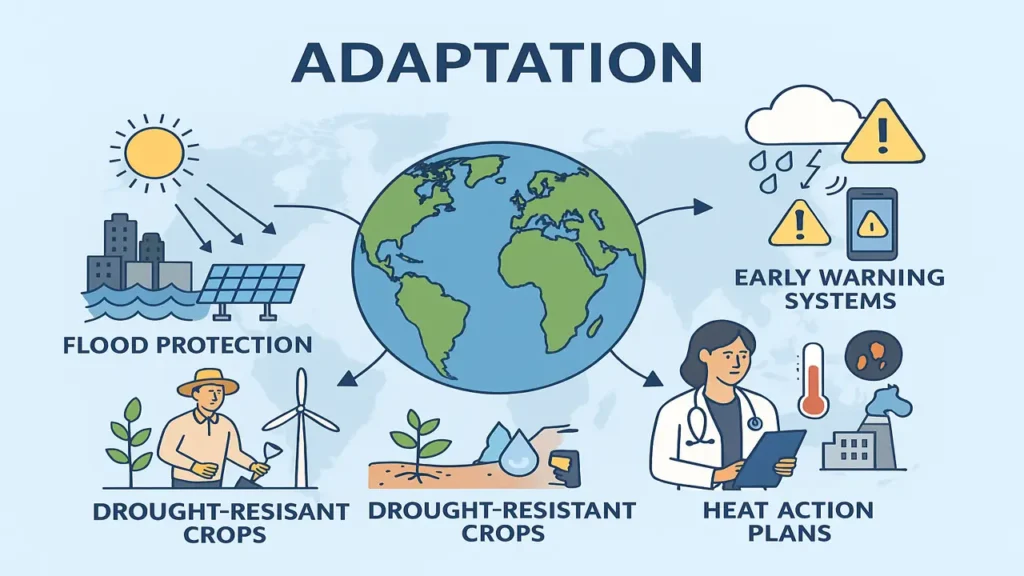
Adaptation Examples
- Infrastructure Protection: Building seawalls, storm-resistant housing, and drainage systems.
- Agricultural Resilience: Drought-tolerant crops, efficient irrigation, crop diversification.
- Water Management: Conservation, desalination, and flood control.
- Disaster Preparedness: Early-warning systems and evacuation planning.
- Public Health Programs: Controlling vector-borne diseases, heat-safety campaigns.
Adaptation saves lives and livelihoods by turning vulnerability into preparedness.
Climate Policy Global Framework for Collective Action
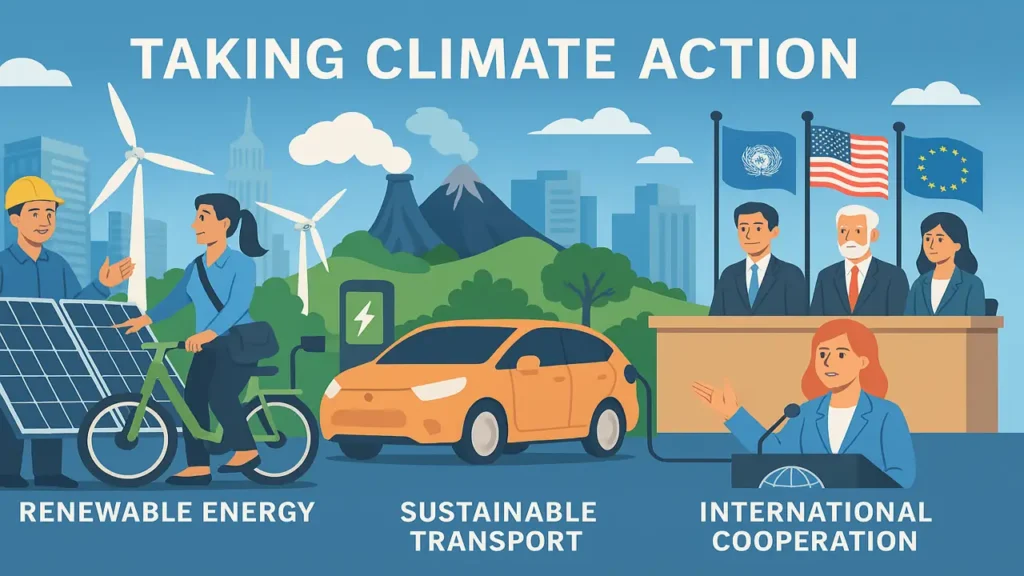
No nation can solve climate change alone. International climate policy aligns scientific understanding with political and economic cooperation.
Major Global Agreements
- UNFCCC (1992): Foundation treaty for climate cooperation.
- Kyoto Protocol (1997): Introduced legally binding emission targets.
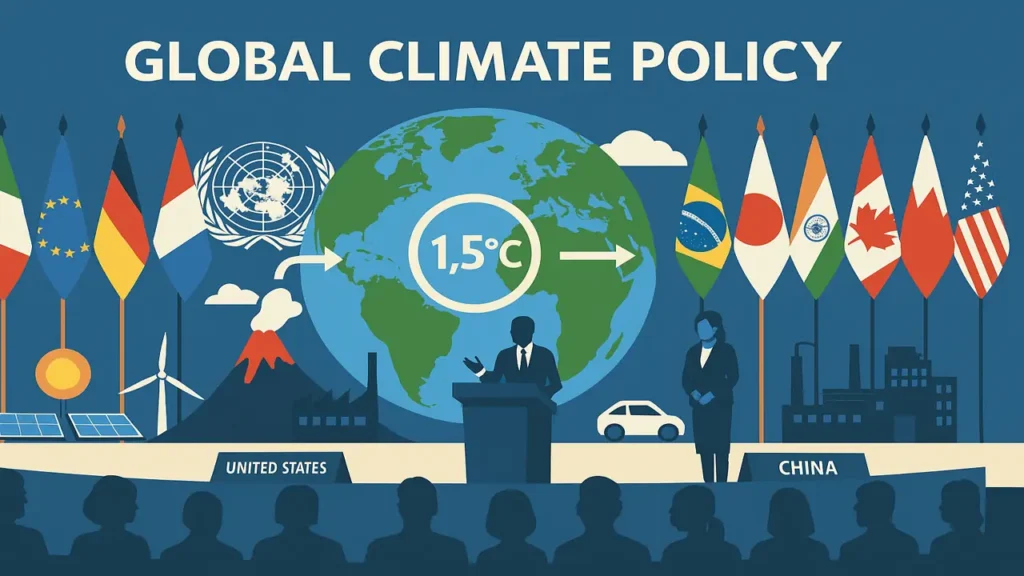
- Paris Agreement (2015): Committed all nations to limit warming below 1.5 °C and submit Nationally Determined Contributions (NDCs).
National & Regional Policies
Countries now integrate climate goals into economic planning promoting green finance, renewable investments, and carbon-neutral targets by mid-century.
Effective climate policy balances economic growth, social welfare, and ecological integrity.
Societal Responses The Human Factor
Scientific progress is not enough; collective human behavior defines the outcome.
Individuals
- Reduce energy use, choose low-carbon transport, support eco-brands.
Businesses
- Invest in clean technologies, sustainable supply chains, and transparency.
Governments
- Legislate emission limits, incentivize renewables, and enforce adaptation planning.
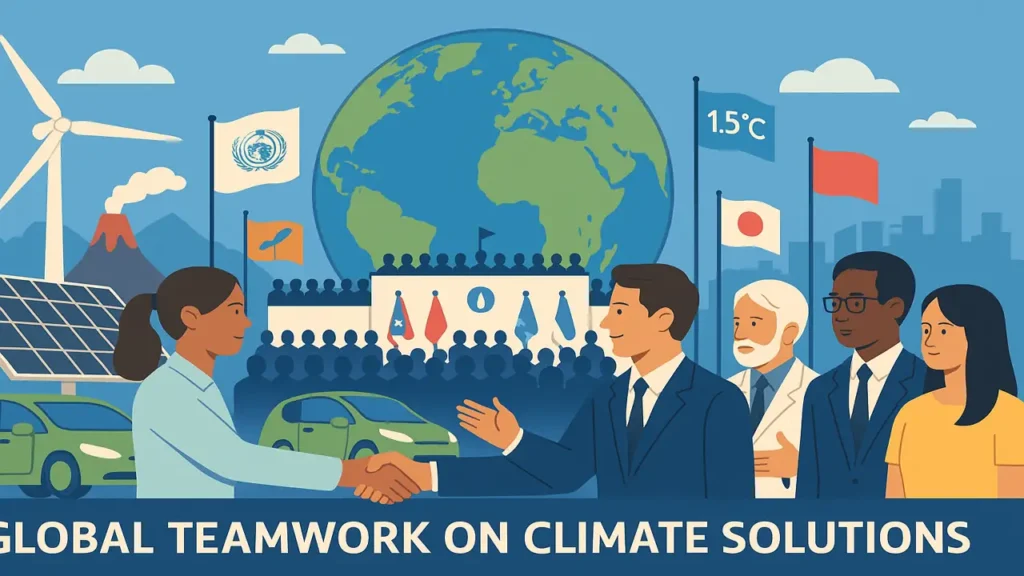
When science, policy, and people unite, humanity’s response becomes powerful enough to alter the planet’s trajectory.
Conclusion Turning Commitments into Change
Week 6 closes the loop between knowledge and responsibility.
Mitigation and adaptation define what we do; climate policy defines how we do it.
Our generation stands at a turning point: act decisively now, or face an uncertain climate future.
Through global cooperation and local innovation, we can still preserve the Earth’s delicate balance.